Saturday, October 11, 2014

Ebola versus influenza and some thoughts on screening

My colleague Eli Perencevich wrote an interesting blog this week in which he discusses airport screening. He points out that some of the discussion surrounding travel restrictions and Ebola are related to ideas from (and models of) epidemics of respiratory viruses, including the 2009 H1N1 pandemic. In the post he highlights some of the important differences between Ebola and influenza:
. . . Ebola is slower moving, has a much longer incubation period (especially compared to the duration of a transcontinental flight), and is not contagious before symptoms develop. What does this mean? It means that if Ebola was as infectious as influenza, millions would have already died - apocalypse. It also means that since Ebola is not transmissible during its long incubation period, it may be possible to quickly isolate patients when symptoms develop. Thus, airport screening on exit or entry could limit transmission and perhaps through early diagnosis allow Ebola infected patients to receive life saving treatment more quickly. 
Later in the post he highlights the need for mathematical model-based analysis of the impact of specific Ebola screening programs. I recommend reading the blog.

As I mentioned in a comment to the piece, in addition to incubation period, it's useful to consider the serial interval (the period between infection and transmission; sometimes also referred to as the generation interval or generation time) and basic reproduction ratio (R0). As discussed before, estimates for R0 for Ebola in this event are similar to estimates of R0 for pandemic influenza events. White and Pagano estimate the serial interval for a 1995 outbreak of Ebola in Congo to be 5.4-7.6 days and the WHO Ebola Response Team estimates the serial interval for the current epidemic to be near 15 days. By comparison, estimates of the serial interval for the 2009 pandemic of influenza fall in the range of 2.5-3.0 days. Ebola has much longer serial intervals than does influenza.

What do we take away from this? One thing is that the serial interval is important for understanding the speed of spread. Perencevich observes that
. . . the first case of Ebola is thought to have occurred 307 days ago on December 6th in a two-year old boy. Since that time there have been an estimated 8,032 cases (granted these could be underestimates). If you compare a similar 307-day period for 2009 H1N1, April 12, 2009 to February 12, 2010 CDC estimated that between 42 million and 86 million cases occurred in the US with a mid-level estimate of 59 million people infected. Think about that -- 7,300 times more cases of H1N1 using the mid-level estimate during the same 307 days.
It's clear, then, that equating influenza and Ebola on the basis of R0 alone is misleading. Thinking of R0 as a reproductive factor for each generation of infection (at the beginning of an epidemic in a susceptible population) and the serial interval as how rapidly generations of infection occur, however, it becomes clearer that the much shorter serial interval of influenza is related the explosive emergence of influenza cases in 2009-10 relative to Ebola in 2013-14, despite the similar R0 values. It's more complex than this in reality; Wallinga and Lipsitch present a detailed mathematical treatment of how generation intervals shape the relationship between epidemic growth rates and reproductive numbers, and Lipsitch et al illustrate, within the context of SARS, how incubation period, serial interval, and epidemic growth rate combine to produce estimates of R0.

Another thing to ponder is that longer serial intervals can, depending on the length of the incubation period, give more time to institute control measures. On the one hand, the long serial interval relative to incubation period in the case of Ebola may suggest a higher likelihood of detecting an infectious traveler in an airport than there is for influenza. On the other hand, the extremely low incidence of Ebola in passengers must also be considered; it may not be an efficient activity to devote resources to.

I agree with Eli that mathematical models can help shed light on such questions. Perhaps such models have been published, I admit to falling behind on the mathematical epidemiology of Ebola results in the last two weeks. 

(image source: David Hartley)

Sunday, October 5, 2014

Ebola, EHRs, and the difficulty of communication

A quick update to a point discussed in the last post. On Thursday night, the Dallas hospital treating the patient suffering from Ebola virus disease explained the mix-up over his travel history. A news release on the hospital's website reads:
10/02/2014
 . . . Protocols were followed by both the physician and the nurses. However, we have identified a flaw in the way the physician and nursing portions of our electronic health records (EHR) interacted in this specific case. In our electronic health records, there are separate physician and nursing workflows.
The release then explained that the flaw had been remedied, by relocating the "travel history documentation to a portion of the EHR that is part of both workflows" and to "specifically reference Ebola-endemic regions in Africa".

The promptness of the communication was reassuring and helpful, and suggested that an analysis of the situation had been undertaken promptly, a cause of the error identified, and action taken to fix it. But 24 hours after the news release, a perplexing clarification was posted:
10/03/2014
We would like to clarify a point made in the statement released earlier in the week. As a standard part of the nursing process, the patient's travel history was documented and available to the full care team in the electronic health record (EHR), including within the physician’s workflow.

There was no flaw in the EHR in the way the physician and nursing portions interacted related to this event.
It's difficult to interpret the dissonance of these two releases, and I think they highlight a hugely important in hospital care: the challenges of effective communication between all members of the healthcare team.

Joyce Frieden wrote a very nice essay on the Dallas episode (published before the hospital's "clarification"), which I recommend reading. One passage describes some of the challenges to effective communication in the clinic:
Although the EHR could have been configured to import the nursing notes -- or at least their key items -- into doctor's notes automatically, "I'm sure some doctors would say it would be a bad idea because it would fill their notes with stuff they're not interested in," he [Dr Dean Sittig] continued. "So that's the culture of the two professions not respecting what each profession does. Whereas before docs had to flip through the nurse's notes to get to where they wanted, now they're on a separate tab. The flaw was that they weren't pushed into the doctor's face."
The importance of effective communication, from the perspective of the Magnet® process, has been discussed by Swanson and Tidwell, who note that 
One characteristic of exemplary professional practice is meticulous attention to communication processes. . . . This use of SBAR has created a standardized approach to information sharing. It has created a shared mental model for effective information transfer by providing a standardized structure for concise, factual communication among clinicians, whether it is nurse-to-nurse, doctor-to–doctor, or nurse-to-doctor communication. It is now used to ensure that patient information is consistently and accurately communicated, especially during critical events, shift handoffs, and patient transfers between levels of care. [Emphasis added.]
Apparently this critical nurse-doctor communication and information transfer didn't occur during the patient's hospital visit on September 26th.

Effective communication is a human process. Software should be used to improve that process, not replace it.

(image source: David Hartley)

Friday, October 3, 2014

Ebola and the cult of vitamin R

File:FEMA - 18213 - Photograph by Robert Kaufmann taken on 10-25-2005 in Louisiana.jpgThis week saw the appearance of Ebola virus disease in a Liberian visitor to the United States. Active transmission here is not expected and public health authorities have done extensive contract tracing. Fifty individuals who were potentially exposed to the virus are being monitored and a small number are in isolation. 

First, a brief description of the episode. A man who had direct contact on September 15th with a woman suffering from advanced Ebola virus disease in Monrovia, Liberia, traveled to Dallas, Texas, to visit relatives. He flew from Monrovia to Brussels on the 19th of September and took a connecting flight to Washington DC before catching a final flight to Dallas, arriving on the 20th. He was screened for fever and exposure at the airport before departing Liberia; apparently, his answers to a screening questionnaire were inaccurate. After arriving in Dallas he remained asymptomatic for several days and began suffering symptoms on the 24th. On the 26th he presented to the hospital. (Note: some news accounts report the date as the 25th.) At this first visit he was evaluated, prescribed antibiotics, and sent home to the relatives with whom he was staying in Dallas. He subsequently deteriorated and was transported to the ED by ambulance on the 28th. The positive test for Ebola virus was received on the 30th.

Many details about this event are unsettling. To me, especially disappointing is that the man's travel history was not a factor in the clinical diagnosis on the 26th, although a nurse was informed that he was visiting from Liberia. The nurse entered the information into the electronic health record (EHR), following protocol, but that didn't trigger suspicion. The hospital has since clarified why: There are separate physician and nursing workflows, and patient travel history did not automatically appear in the physician's standard workflow. The doctor never saw the information.

I think it's also interesting that the man was prescribed antibiotics for what turned out to be a viral illness. In a sense, this is a familiar story: change the name of the virus and it's a scene that occurs daily in many clinics and office visits. It seems ironic that, a week after the White House released its National Strategy for Combating Antibiotic-resistant Bacteria, this physician-patient encounter resulted in the apparent inappropriate prescription of antibiotics. As the National Strategy tells us, 
. . . a growing body of evidence demonstrates that programs dedicated to improving antibiotic use, known as "antibiotic stewardship" programs, can help slow the emergence of resistance while optimizing treatment and minimizing costs. These programs help providers prescribe the right antibiotic for the right amount of time and prevent prescription of antibiotics for non-bacterial infections. It is imperative that such programs become a routine and robust component of healthcare delivery in the United States. (emphasis added)
To be fair, the man may have had a bacterial infection at the first hospital visit, in addition to the unsuspected Ebola virus infection. We don't know; it's a matter of his private health record. However, I am reminded of how a physician colleague once described the pervasive inappropriate, and often rushed, use of antibiotics,
It's a common problem. Patients present with vague complaints that are plausibly due to bacterial infection and there is a very low threshold for prescribing antibiotics. The patients often request or insist on it, and it often seems harmless to acquiesce. In fact, many doctors view prescribing them as a protection mechanism in case there is an infection or one develops. It's so common that in many clinics and EDs ceftriaxone is referred to as "vitamin R".
Perhaps the antibiotic prescription dimension of the encounter on the 26th is all too understandable.

One can hope that a thorough, transparent investigation and analysis of this entire episode can produce helpful knowledge on how to harden healthcare systems for routine healthcare as well as extraordinary events like this one. In the meantime, the CDC has produced clear guidance for evaluating patients with a history of traveling to epidemic regions.

Acknowledgement: The title is inspired from a Medscape Connect item entitled "The cult of Vitamin R", which no longer appears to be available online.

(image source: Wikipedia)

Friday, September 26, 2014

Epidemiology and behavior in the time of Ebola

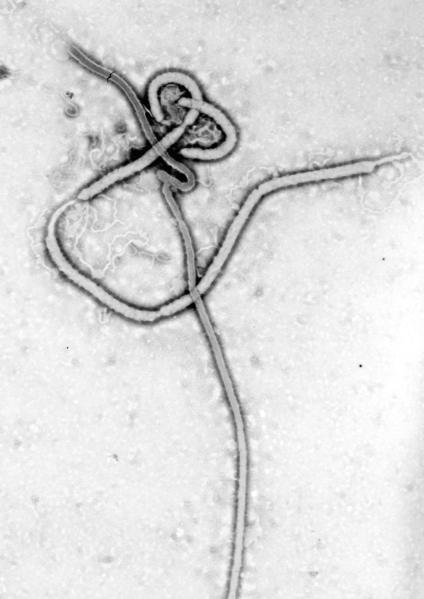
File:Ebola virus em.pngThis week the WHO Ebola Response Team published a paper raising the notion that Ebola could become endemic in the human population of West Africa. The idea hadn't occurred to me previously, and it struck me as very unlikely. After all, this is a directly transmissible disease that, as many have told us, we know how to control.

After reflecting on the possibility, however, I don't think it can be discounted out of hand. On the one hand, breaking the chain of transmission can be achieved theoretically with careful attention to infection control and prevention practice, which is well defined in the healthcare environment. On the other hand, this isn't a nosocomial outbreak. Community transmission is the major driver of incident cases, so changing human behavior in the community must occur if this epidemic is to be stopped. In general behavior is hard to affect, and in this case it may be even harder, given recent descriptions of distrust between healthcare providers and the community.

As I've mentioned before, one of the uses of mathematical modeling is to support clear and careful thinking. In this case, epidemiologists have applied models to estimate the basic reproduction ratio, R0, and have found it to be greater than 1, consistent with estimates from past outbreaks. Such an R0 suggests that the virus has the potential to circulate permanently in the human population at some non-zero endemic prevalence. Endemic prevalence levels could be, relatively speaking, high or low (or intermediate). If low enough, the disease could fade out stochastically on its own, but at higher prevalences the continual danger of sporadic cases could persist indefinitely. Models can help us gain a sense of the relative likelihood of such outcomes.

The risk factors for acquiring Ebola virus infection are well known. If effective interventions reducing risky behavior are instituted widely and adhered to, they may reduce the effective reproduction ratio, Reff, to less than 1, thereby breaking the chain of transmission. Achieving that must entail not only nosocomial infection control but also infection prevention through behavioral change in the community.

Changing behavior surely involves building and rebuilding trust between healthcare providers and local people. I suspect and hope that the recent massive pledges of, and plans for, assistance will help build the necessary rapport and trust. Maybe the construction of clinic facilities that better support effective care will help advance such endeavors. One thing is certain, however: the longer those pledges take to become reality, the more likely the worst scenarios for the course of this epidemic become.

(image source: Wikipedia)

Sunday, September 14, 2014

Ebola: Mutation, selection, and all that

File:Charles Darwin by Julia Margaret Cameron 2.jpgThe New York Times recently published an op-ed on the Ebola situation in western Africa. One of the things discussed by Michael Osterholmn in that essay is the possibility that "an Ebola virus could mutate to become transmissible through the air." I think this is an interesting idea; if the currently circulating virus were to become dramatically more transmissible, it would make an already desperate situation dire.

The issue of mutation and selection is complex, as described in an excellent post by Jamie Jones. What selective pressures are acting upon Ebola viruses circulating in western Africa currently, and how those might alter the clinical epidemiology of the disease, are interesting and relevant questions.

Many have reacted to the question of how real the risk described by Osterholm is. I think positing such possibilities, and the ensuing discussion, is helpful. Even if the possibility is a false alarm, having people think through the issue, likelihood, and potential impact has value. It should not, however, distract us from important and desperately needed public health operations on the ground, or advocacy efforts to increase the resources for those operations.

(image source: Wikipedia)

Saturday, September 6, 2014

On truthiness, celebrities, and math

File:Time Saving Truth from Falsehood and Envy.jpgKaty Waldman recently published an article discussing how people's minds tend to grasp at the "low-hanging cognitive fruit" in daily life. She describes how sometimes we accept ideas as facts according their "truthiness" (a term coined by Steven Colbert in 2005). It's an interesting article and I recommend reading it. It makes me wonder about the role of truthiness in health-related behavior.

Colbert has described the notion of truthiness:
It used to be, everyone was entitled to their own opinion, but not their own facts. But that's not the case anymore. Facts matter not at all. Perception is everything. It's certainty. . . . Truthiness is "What I say is right, and [nothing] anyone else says could possibly be true." It's not only that I feel it to be true, but that I feel it to be true. There's not only an emotional quality, but there's a selfish quality.
Waldman surveys some of the evidence for truthiness: how people, instead of analyzing data critically to draw conclusions, sometimes accept ideas based on seemingly unrelated criteria, like the aesthetic presentation of a written message or the familiarity of a message bearer's name.

Within the realm of health behavior, truthiness can be devastating. In epidemiology, for example, it is often said that people who suffer from a condition tend to look for and find a cause, whether one exists or not. Truthiness reminds me of Jenny McCarthy's views on vaccination and autism, which she described during an interview on The Oprah Winfrey Show:
Winfrey: So what do you think triggered the autism [in your son]? I know you have a theory.
McCarthy: I do have a theory.
Winfrey: Mom instinct.
McCarthy: Mommy instinct. You know, everyone knows the stats, which being one in one hundred and fifty children have autism.
Winfrey: It used to be one in ten thousand.
McCarthy: And, you know, what I have to say is this: What number does it have to be? What number will it take for people just to start listening to what the mothers of children who have autism have been saying for years? Which is that we vaccinated our baby and something happened. . . .
McCarthy: Right before his MMR shot, I said to the doctor, I have a very bad feeling about this shot. This is the autism shot, isn’t it? And he said, “No, that is ridiculous. It is a mother’s desperate attempt to blame something on autism.” And he swore at me. . . . And not soon thereafter, I noticed that change in the pictures: Boom! Soul, gone from his eyes.
The post hoc, ergo propter hoc fallacy of the passage has a high truthiness to many, even though scientific bodies have debunked the notion that vaccination causes autism.

How do "truthy" fringe ideas persist and grow in the general population? Deffuant and coworkers in 2002 published a study applying agent-based modeling to analyze the propagation of extremist views. Nigel Gilbert's book describes the study succinctly:
In Duffuant et al's model, agents [individuals] have an opinion . . . and a degree of doubt about their opinion, called uncertainty . . . An agent's opinion segment is defined as the band centered on the agent's opinion, spreading to the right and left by the agent's value for uncertainty. Agents interact randomly. When they meet, one agent may influence the other if their opinion segments overlap. If the opinion segments do not overlap, the agents are assumed to be so different in the opinions that they have no chance of influencing each other. If an agent does influence another, the opinion of one agent (j) is affected by the opinion of another agent (i) by an amount proportional to the difference between their opinions, multiplied by the amount of overlap divided by agent i's uncertainty minus one. The effect of this formula is that very uncertain agents influence other agents less than those that are certain.

 . . . The model shows that a few extremists with opinions that are not open to influence from other agents can have a dramatic effect on the opinions of the majority . . .
In the case of vaccination and autism, the high truthiness (to some) of the idea that MMR vaccine causes autism produces a group of people very certain in their beliefs. Duffuant et al, working within the context of political ideas, show that such a group can impact the opinions of others, thereby propagating their ideas.

Perhaps similar dynamics apply to the case of vaccination, and potentially other health-related memes such as the raw milk movement. I also wonder about the truthiness of the local myths surrounding Ebola and how those might spread more widely, potentially affecting public health in outbreak areas adversely.

(image source: Wikipedia)

Tuesday, September 2, 2014

Why model infectious disease: Ebola

Several weeks ago I wrote a blog on why modeling infectious disease is useful. Now seems like a good time to highlight a few issues regarding "why model?" within the context of the current Ebola event. Science Insider recently published a very nice piece on Ebola modeling and some initial results from different groups working the issue. Discussing the article with a few colleagues who are not modelers, however, I sensed some skepticism regarding the past track record of models and why it's useful to model this outbreak.

As described by many authors previously (see the links in the previous blog), a major use of modeling is to help researchers think carefully about a problem. That's especially true in the current situation, where models can help analyze complex issues. A few examples include:
  • What can be derived from data in hand, or data that can be collected, to improve our ability to clarify the situation? 
  • Can we infer how quickly the virus is being transmitted and whether it is decreasing, increasing, or staying the same (questions regarding the basic reproduction ratio, R0, and the effective reproduction ratio, Reff)?  
  • If vaccines become available, what coverage and efficacy might be necessary to control the outbreak (i.e., reduce Reff below 1)? What vaccination strategies are likely to make optimal use of resources?
  • Are there combination interventions that might prove effective at reducing the incidence of infection? 
  • What is the likelihood of Ebola cases arriving in distant nations via air travel? 
In short, there are plenty of questions that modeling can help elucidate.

One should be skeptical about any epidemiologic method, including mathematical and computer modeling, when the stakes for public health are so high. Ultimately, however, policymakers need timely and defensible analytic guidance to support allocation of scarce resources. Modeling is one component of such guidance.

(image source: David Hartley)