Showing posts with label social media. Show all posts

Thursday, December 4, 2014

The epidemiology of Fearbola

In the mid-19th Century, a newspaper could reach several thousand people daily or weekly. By the mid-20th Century, TV and radio reached 10s to 100s of millions of people instantaneously and possessed a multinational reach. Today, with the Internet, and satellite TV and radio, it is possible to reach 100s of millions of people or more across the globe within minutes. This vast and practically instantaneous reach of technology feeds a seemingly insatiable, 24/7 appetite for news and information. What are the implications of this for fighting epidemics? 

We've seen some of the consequences in the Ebola outbreak this year. On the one hand, the ability of aid groups to spread information broadly has been helpful for raising awareness and bringing additional resources to bear on the epidemic. On the other hand, news headlines resulted in near-hysteria and much counterproductive behavior in the US and other developed nations. Examples were highlighted in a previous post, and many, many others have offered similar observations and commentary.

Perhaps the reactions observed in the US have been understandable, as many ingredients were present for an epidemic of sensationalism and fear: An active public imagination rooted in previous popular books and movies, a government that addressed the issue late and with almost Pollyannaish credibility at first, and a wealth of news outlets offering non-expert commentary while playing to the continuous news cycle.

The resulting epidemic of "Fearbola" should thus not be surprising. It is sobering, however, for it provides a warning for domestic public health agencies: Understand how to administer effective public health messages that are relevant and appealing to the constant clamor of CNN, Fox, and the like, or else risk being drowned out by noise and hype. What if this epidemic had been of a pathogen possessing a short serial interval and high virulence, transmissibility, and R0? The medical system may or may not be prepared, but it seems clear that our risk communication strategies are not. Would the news coverage we saw during the Ebola hysteria in recent months have served the public well if this had been a bona fide threat to US public health?

It's important to understand how the epidemic of fear and hype came into being and propagated so well. I tend to think of messages as themselves being infectious. From that perspective, the ideas that resulted in the hysteria surely had R0 > 1. For ideas related to "dread threats", such as virulent infections with no known cure, is this unavoidable given the high contact rate (e.g., frequency of checking for news and rumors combined with near-constant coverage), short serial internal (e.g., rush to post on social media), broad coverage, and rapid dissemination of modern communications?

If so, we must learn how to craft public health messaging strategies so that authoritative messages will out-compete hype and fear in our hyper-connected world. If we don't learn how to do so, we run the risk that important messages will be drowned out by high-incidence, fearful messages in future outbreaks of international public health importance.

(image source: David Hartley)

Thursday, July 31, 2014

Ebola: Thoughts on a public health disaster

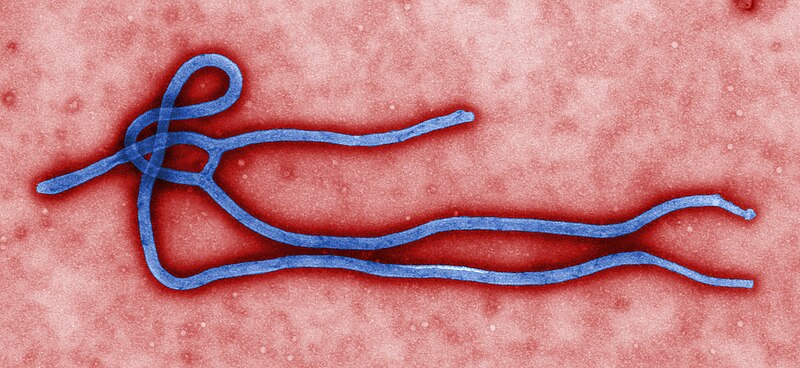
File:Ebola virus virion.jpgThe current outbreak of Ebola hemorrhagic fever in western Africa has been ongoing for months. It is a remarkable and tragic event. Sadly, there is no known cure, the case fatality proportion is high (historically 50-90%), and prevention is difficult in the areas where the virus is currently spreading.

Nations outside Africa are now recognizing the possibility of Ebola-infected travelers returning home. Importation of disease is a public health issue for other infections, such as measles, outbreaks of which are commonly sparked by visitors returning from areas where cases are prevalent. In the case of Ebola, one traveler died on the last leg of a West African trip, before returning home to Minnesota, so there's good reason to believe that importation could occur. It's probably unlikely, however, given the current level of awareness. Some African airlines, for example, have curtailed air service in affected areas and are screening passengers for signs of illness. International guidance on passenger screening is being evaluated as well. Moreover, CDC has issued interim guidance regarding Ebola for airline flight crews, cleaning personnel, and cargo personnel.

If an infected or infectious traveler does return, is it unlikely to result in the dramatic transmission currently observed in Africa. The current heightened awareness makes it very likely that travelers returning from affected areas would be evaluated for possible Ebola infection should they develop illness and present to a healthcare provider. The CDC has issued guidance advising healthcare workers to
be alert for signs and symptoms of EVD [Ebola virus disease] in patients with compatible illness who have a recent (within 21 days) travel history to countries where the outbreak is occurring, and should consider isolation of those patients meeting these criteria, pending diagnostic testing. 
Infection control procedures are standard and the necessary supplies are plentiful in Western hospitals, making it unlikely that an Ebola patient would cause secondary infections in healthcare settings.

Moreover, Ebola virus is much less transmissible than many other viruses. Measles virus, for example, has basic reproduction ratios in the range of 11-18, whereas those for Ebola have been estimated to be between 1-2. For comparison, the basic reproductive ratio for influenza is estimated to be 3-4, for rubella 6-7, and for chickenpox 10-12. The ratio for pertussis is similar to that of measles. One wonders what the basic reproduction ratio is for the current outbreak in Africa is (and if analytic approaches using social media might be helpful for estimating it).

Given that the current outbreak is so large compared to past outbreaks of Ebola, we might learn some lessons about this exotic disease. For example, are there transmission pathways that we don't know of at present? Aerosol transmission is thought to play only a minor role if any in transmission of human strains of Ebola virus, but perhaps new information will emerge from future epidemiological studies of the current outbreak.

What is for sure is that the events in Africa are a tremendous human tragedy. I hope that the desperate measures of closing schools and nonessential government services will help to control the spread of the virus. It isn't clear that it will.

(image source: Wikipedia)

Sunday, July 6, 2014

Some broad threats to public health

File:Overflowepa.gifA recent Twitter thread highlighted several current threats to public health and I thought the points were sufficiently important to immortalize in a blog -- not necessarily because any one point is of primal importance (although each one alone is stunningly important for public health), but rather because we often forget to think holistically about public health. The reality is, of course, that many areas must combine in order to make good public health possible.

The thread highlighted three elements of public health that are all compromised to some extent at present: the effectiveness of antimicrobial drugs, the coverage of vaccination against vaccine preventable infectious diseases, and the preservation of sanitation infrastructure.

A few words about each of these. The specter of pathogens resistant to current antimicrobial drugs is well known. This topic is widely covered in the news media, in the scientific and medical literature, and even in political discourse. There is also a rich conversation on social media. Much has been written about the coming -- or, if you're a patient infected with a resistant pathogen, the present -- post-antibiotic era. The threat to public health is so great that the issue is now commanding economic and political attention, which hopefully will result in action soon.

And yet, antimicrobial resistance is not the only important threat to public health. The incidence of many vaccine-preventable diseases is increasing, not because pathogens are evolving and becoming mismatched to vaccines, but because significant numbers of people are electing to forgo having children vaccinated. The reasons why are varied and complex, but often they originate in mistrust between people and those who make and provide vaccines. Part of that mistrust was eroded by deeply flawed published research that has since been discredited; meanwhile, the effects and attendant impacts on human health continue. Moreover, vaccines are getting more expensive, and have been for years, which probably doesn't help the goal of increasing coverage, either.

Lastly, the sanitation infrastructure in many US cities is old, undersized, and crumbling. (It's not only the sanitation infrastructure that is failing or threatening to fail; transportation and power distribution are similar stories.) As a result, human waste is frequently released into the environment. This is remarkable for many reasons, not the least of which is that sanitation is one the oldest and most recognized cornerstones of public health. The undesirability of having human excrement handled improperly is so obvious that there's no reason to belabor the point here.

It's tempting to refer to these issues as horsemen of the public health apocalypse, but that would be bombastic and incomplete. There are other important threats, including the safety of the food supply, the high incidence of healthcare associated infections (both susceptible and drug resistant), the growing prominence of chronic diseases of the aging and the attendant demands on healthcare resources, and the continued emergence of new pathogens from nature.

To close, it's good to resurface from the depths of one's own research periodically. It can result in context and perspective, which is badly needed in any field of research. Much has been written about the use of Twitter in healthcare and biomedical research. Maybe this is another: it can force you to come up for air.

(image source: Wikipedia)

Sunday, June 8, 2014

New antibiotics on the horizon: Are we ready?

A previous blog asked:
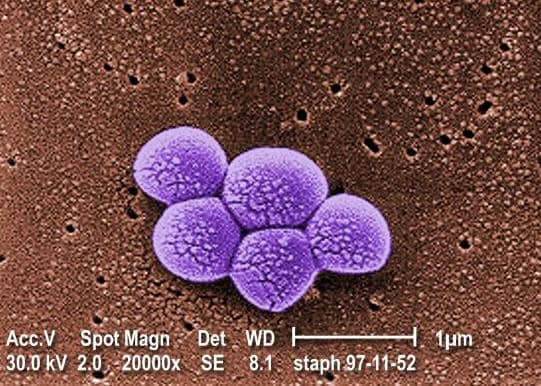
Photograph depicted a cutaneous abscess,  caused by MRSAWho wouldn't agree that we need an invigorated pipeline of new, effective, and safe antimicrobial drugs to help us counter the specter of resistance? But it does make me wonder: Is it really a good idea to place new weapons in our arsenal when we have demonstrated few reasons to think that we will use them responsibly?
A reinvigoration of the drug pipeline may be starting, given news that a major drug company is re-engaging its research on antibiotics. Moreover, this week we learned about a new highly potent drug, and another one that was just approved by the FDA, for skin infections. Other new drugs are under development as well.

It seems poignant to think about how to make it safe to employ new antibiotics on a wide scale so as not to risk the emergence of new resistance. It's a complex issue, but here are some thoughts.
  • Antimicrobial stewardship programs need to implemented across all healthcare settings. Using antimicrobials in a targeted, appropriate fashion is important for preventing acquisition of new resistance. Progress is being made in some settings (notably children's hospitals), but programs need to be instituted across the board.
  • HAI rates need to be reduced to very low levels across institutions and patient populations. Low rates are important for preventing the spread of resistant infections once they emerge. Substantial opportunities remain to improve infection prevention programs in hospitals.  
  • Patient expectations for drug therapy for common ailments need to be managed. Patients often pressure doctors for antibiotics for common symptoms (e.g., sore throat, congestion), even when etiology (viral versus bacterial) is unclear. Public health messaging, including the use of social media, is important for changing this. 

Undoubtedly, additional things are important as well. I haven't mentioned, for example, the issues surrounding the intensive use of antibiotics in animal farming, the emergence of antibiotic resistance organisms surrounding those practices, and the potential for causing human colonization and disease. If you have additional thoughts, please comment.

An important question is how we can measure progress in these areas. Surveillance for antimicrobial stewardship policy compliance and HAI rates within an institution seems more straightforward than monitoring these across regions. Likewise, monitoring public perception and expectations for antibiotic prescribing practice is complex. Perhaps this is an area where social media monitoring can play a role. Regardless of the difficulties, measuring such things is critical if we are to manage drug resistance moving forward.

(image source: CDC)

Tuesday, April 22, 2014

Social media, the Manhattan Project, and big data

Social media and the Manhattan Project may seem to be completely different things, but there are facets of each that are similar. Let me explain.

The Manhattan Project was a massive and ambitious R&D project undertaken in World War II that transformed theory and data into a functioning product within a few short years. It was supported by vast resources and it brought people from many different backgrounds together to solve complex problems. Because of its success, the term "Manhattan Project" has become a cliché for any concerted effort to solve "big" problems, like energy or cancer. Although the original project was for weapons development, today the term is used in a positive light -- a project to solve an important but hard problem.

People have studied the Manhattan Project to understand why it was successful. Several factors are thought to have contributed, including:
  • Talent -- the project recruited talented individuals and gave them responsibility for solving key problems.
  • Youth -- the mean age of the scientific and technical staff at Los Alamos, New Mexico, where important work was done, was 25. 
  • Leadership -- divisions of the project were led by people of undisputed accomplishment and they, in turn, were managed, but not micromanaged, by strong leaders.
  • Focus -- the entire project was focused on outcomes and meeting milestones along the way. 
  • Conviction -- participants were deeply committed to achieving the end goal before a wartime enemy did. 
  • Communication -- while much of the project was protected information, free discussion within certain divisions was allowed and found to be necessary for success.   
  • Dispersion -- the project had operations in several states.

Within the context of public health and medicine, social media has many of these attributes. Users tend to be young. They often organize themselves into virtual communities of interest focused on important and complex topics. Users are dispersed throughout the world and are willing to actively communicate on virtually any issue. Significant effort can be brought to bear on a question at an instant's notice. And users tend to follow online leaders and thought influencers.

Because of the number of healthcare providers and consumers using social media, and the diversity and expertise of these users, social media in medicine is an immense resource. It has been used for infectious disease surveillance; patient sentiment analysis; testing treatments and speeding patient recruitment into clinical trials; understanding views on vaccines; and many, many other purposes, too numerous to list here.

Another dimension of medical social media is the potential to produce "big data". In a previous post I discussed the need for theory and context in big data if we are to make sound inferences. Certainly, others have warned about the pitfalls of big data as well. With such social media projects comes the potential to acquire vast amounts of data in a focused, disciplined way. Social media projects hold the promise of collecting big data to address specific research questions.

I don't know if social media can be harnessed into a Manhattan Project for any single issue in healthcare, but it is clear that it is playing important roles throughout the spectrum of medicine. It is a conduit for collecting types and volumes of data previously un-imagined, for catalyzing participatory medicine and patient engagement, and for generating and sharing wisdom. The practice of medicine in the 21st Century has important psychosocial, behavioral, economic, and scientific dimensions; social media plays in them all.

(image source: David Hartley)