Showing posts with label human behavior. Show all posts

Saturday, October 18, 2014

Fear, Ebola, and the plague doctor's outfit

An earlier post mused that, in some ways, modern healthcare workers in contact precautions might appear as the plague doctors did in the Middle Ages to their febrile, terrified patients. The imagery of the plague doctor's outfit has survived centuries in association with a horrific event responsible for significant death and social disruption. Today, the doctor's outfit remains a powerful symbol of desperate times.

While the current epidemic of Ebola virus disease is unlikely to have the depopulating effect that plague did in the 1300s -- the Black Death is estimated to have killed up to 60% of the European population at the time -- the deadliness of this virus as it circulates in Western Africa must produce a fear similar to that of the Black Death in the Middle Ages. It makes me wonder if, years from now, pictures of doctors and nurses in Ebola personal protective equipment (PPE) -- the garb healthcare workers must wear to care for patients -- will conjure up similar reactions to those of the plague doctor's outfit.

Think of the similarities. If the case fatality rate (CFR) of plague in the 14th Century was similar to that of plague in the US between 1900 and 1941 (i.e., in the pre-antibiotic era), the CFR of the Black Death could have been over 60%. The CFR of Ebola in West Africa is currently estimated to be near 70%. Probably due to this high CFR during the Black Death, people were often deeply skeptical of doctors, as as Giovanni Boccaccio  describes in The Decameron:
Which maladies seemed set entirely at naught both the art of the physician and the virtue of physic; indeed, whether it was that the disorder was of a nature to defy such treatment, or that the physicians were at fault - besides the qualified there was now a multitude both of men and of women who practiced without having received the slightest tincture of medical science - and, being in ignorance of its source, failed to apply the proper remedies; in either case, not merely were those that covered few, but almost all within three days from the appearance of the said symptoms, sooner or later, died, and in most cases without any fever or other attendant malady . . . 
As we have read in this event, distrust of healthcare workers in Western Africa has led to attacks on doctors, though this sentiment may partially stem from historical events. Indeed, serious issues with healthcare in this region are nothing new.

Of course, there are important differences between bubonic plague in the Middle Ages and Ebola in Africa today as well. Plague is caused by a bacterium whereas Ebola virus disease has a viral etiology; Yersinia pestis is carried by domestic rodents and vectored to humans by fleas whereas Ebola virus is directly transmitted between humans; et cetera. Perception is reality, however, and one overarching public perception is proving a difficult to alter: Ebola is terrifying. Ebola PPE is a modern plague doctor's suit, a tangible symbol of fear, a fear that we have but to turn on any newscast to see spread.

I feel strongly that we must never forget the human dimensions of disease. Physiologically speaking, Ebola virus disease in Homo sapiens is increasingly well understood, but the impact of the disease on the human condition is perhaps less so. If we are to control the spread of Ebola virus, we must understand this better; it seems clear that we don't. Fear and panic only make the situation worse. We must control the fear.

(image source: Wikipedia and WHO)

Friday, September 26, 2014

Epidemiology and behavior in the time of Ebola

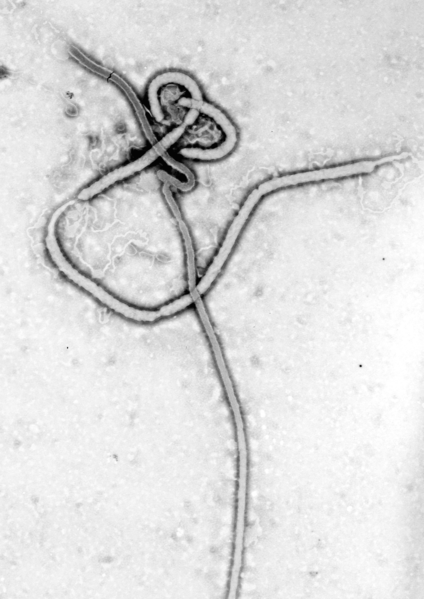
File:Ebola virus em.pngThis week the WHO Ebola Response Team published a paper raising the notion that Ebola could become endemic in the human population of West Africa. The idea hadn't occurred to me previously, and it struck me as very unlikely. After all, this is a directly transmissible disease that, as many have told us, we know how to control.

After reflecting on the possibility, however, I don't think it can be discounted out of hand. On the one hand, breaking the chain of transmission can be achieved theoretically with careful attention to infection control and prevention practice, which is well defined in the healthcare environment. On the other hand, this isn't a nosocomial outbreak. Community transmission is the major driver of incident cases, so changing human behavior in the community must occur if this epidemic is to be stopped. In general behavior is hard to affect, and in this case it may be even harder, given recent descriptions of distrust between healthcare providers and the community.

As I've mentioned before, one of the uses of mathematical modeling is to support clear and careful thinking. In this case, epidemiologists have applied models to estimate the basic reproduction ratio, R0, and have found it to be greater than 1, consistent with estimates from past outbreaks. Such an R0 suggests that the virus has the potential to circulate permanently in the human population at some non-zero endemic prevalence. Endemic prevalence levels could be, relatively speaking, high or low (or intermediate). If low enough, the disease could fade out stochastically on its own, but at higher prevalences the continual danger of sporadic cases could persist indefinitely. Models can help us gain a sense of the relative likelihood of such outcomes.

The risk factors for acquiring Ebola virus infection are well known. If effective interventions reducing risky behavior are instituted widely and adhered to, they may reduce the effective reproduction ratio, Reff, to less than 1, thereby breaking the chain of transmission. Achieving that must entail not only nosocomial infection control but also infection prevention through behavioral change in the community.

Changing behavior surely involves building and rebuilding trust between healthcare providers and local people. I suspect and hope that the recent massive pledges of, and plans for, assistance will help build the necessary rapport and trust. Maybe the construction of clinic facilities that better support effective care will help advance such endeavors. One thing is certain, however: the longer those pledges take to become reality, the more likely the worst scenarios for the course of this epidemic become.

(image source: Wikipedia)

Saturday, September 6, 2014

On truthiness, celebrities, and math

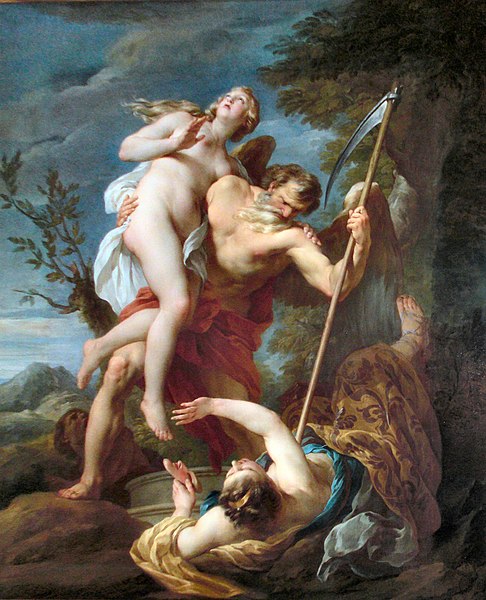
File:Time Saving Truth from Falsehood and Envy.jpgKaty Waldman recently published an article discussing how people's minds tend to grasp at the "low-hanging cognitive fruit" in daily life. She describes how sometimes we accept ideas as facts according their "truthiness" (a term coined by Steven Colbert in 2005). It's an interesting article and I recommend reading it. It makes me wonder about the role of truthiness in health-related behavior.

Colbert has described the notion of truthiness:
It used to be, everyone was entitled to their own opinion, but not their own facts. But that's not the case anymore. Facts matter not at all. Perception is everything. It's certainty. . . . Truthiness is "What I say is right, and [nothing] anyone else says could possibly be true." It's not only that I feel it to be true, but that I feel it to be true. There's not only an emotional quality, but there's a selfish quality.
Waldman surveys some of the evidence for truthiness: how people, instead of analyzing data critically to draw conclusions, sometimes accept ideas based on seemingly unrelated criteria, like the aesthetic presentation of a written message or the familiarity of a message bearer's name.

Within the realm of health behavior, truthiness can be devastating. In epidemiology, for example, it is often said that people who suffer from a condition tend to look for and find a cause, whether one exists or not. Truthiness reminds me of Jenny McCarthy's views on vaccination and autism, which she described during an interview on The Oprah Winfrey Show:
Winfrey: So what do you think triggered the autism [in your son]? I know you have a theory.
McCarthy: I do have a theory.
Winfrey: Mom instinct.
McCarthy: Mommy instinct. You know, everyone knows the stats, which being one in one hundred and fifty children have autism.
Winfrey: It used to be one in ten thousand.
McCarthy: And, you know, what I have to say is this: What number does it have to be? What number will it take for people just to start listening to what the mothers of children who have autism have been saying for years? Which is that we vaccinated our baby and something happened. . . .
McCarthy: Right before his MMR shot, I said to the doctor, I have a very bad feeling about this shot. This is the autism shot, isn’t it? And he said, “No, that is ridiculous. It is a mother’s desperate attempt to blame something on autism.” And he swore at me. . . . And not soon thereafter, I noticed that change in the pictures: Boom! Soul, gone from his eyes.
The post hoc, ergo propter hoc fallacy of the passage has a high truthiness to many, even though scientific bodies have debunked the notion that vaccination causes autism.

How do "truthy" fringe ideas persist and grow in the general population? Deffuant and coworkers in 2002 published a study applying agent-based modeling to analyze the propagation of extremist views. Nigel Gilbert's book describes the study succinctly:
In Duffuant et al's model, agents [individuals] have an opinion . . . and a degree of doubt about their opinion, called uncertainty . . . An agent's opinion segment is defined as the band centered on the agent's opinion, spreading to the right and left by the agent's value for uncertainty. Agents interact randomly. When they meet, one agent may influence the other if their opinion segments overlap. If the opinion segments do not overlap, the agents are assumed to be so different in the opinions that they have no chance of influencing each other. If an agent does influence another, the opinion of one agent (j) is affected by the opinion of another agent (i) by an amount proportional to the difference between their opinions, multiplied by the amount of overlap divided by agent i's uncertainty minus one. The effect of this formula is that very uncertain agents influence other agents less than those that are certain.

 . . . The model shows that a few extremists with opinions that are not open to influence from other agents can have a dramatic effect on the opinions of the majority . . .
In the case of vaccination and autism, the high truthiness (to some) of the idea that MMR vaccine causes autism produces a group of people very certain in their beliefs. Duffuant et al, working within the context of political ideas, show that such a group can impact the opinions of others, thereby propagating their ideas.

Perhaps similar dynamics apply to the case of vaccination, and potentially other health-related memes such as the raw milk movement. I also wonder about the truthiness of the local myths surrounding Ebola and how those might spread more widely, potentially affecting public health in outbreak areas adversely.

(image source: Wikipedia)

Tuesday, April 8, 2014

Raw milk, part III: The battle on the Hill

File:United States Capitol dome daylight.jpgI've written previously about the raw milk movement and the dangers of consuming raw milk. Now two bills have been introduced in Congress by Rep. Thomas Massie (Republican, Kentucky). According to the Congressional Research Service, the “Milk Freedom Act of 2014
Prohibits a federal department, agency, or court from taking any action that would prohibit, regulate, or otherwise restrict the interstate traffic of milk or a milk product that is unpasteurized and packaged for direct human consumption if such action is based solely upon a determination that because the milk or milk product is unpasteurized it is adulterated, misbranded, or otherwise in violation of federal law.
The second bill, the “Interstate Milk Freedom Act of 2014
Prohibits a federal department, agency, or court from taking any action that would prohibit, regulate, or otherwise restrict the interstate traffic of milk or a milk product that is unpasteurized and packaged for direct human consumption if: (1) such action is based solely upon a determination that because the milk or milk product is unpasteurized it is adulterated, misbranded, or otherwise in violation of federal law; (2) the milk or milk product's state of origin allows unpasteurized milk or unpasteurized milk products to be distributed for direct human consumption by any means; (3) the milk or milk product is produced, packaged, and moved in compliance with the laws of such state of origin; and (4) the milk or milk product is moved from the state of origin for transport to another state which allows the distribution of unpasteurized milk or unpasteurized milk products for direct human consumption.
The rationale for the two bills? Personal liberty. Politico quotes Rep. Massie as saying
Today, many people are paying more attention to the food they eat, what it contains, and how it is processed. Raw milk, which has been with us for thousands of years, is making a comeback among these discerning consumers. Personal choices as basic as ‘what we feed our families’ should not be limited by the federal government. [Emphasis added.]
It's an argument that has been heard before.

It's important to understand how individuals advocating such positions evaluate the choice between the "right" to endanger themselves and those around them (e.g., children and others to whom they serve raw milk) versus the right to personal and public safety. Certainly this choice exists in other areas of human behavior and legislative decisions have been made to protect public and individual health. For example, drinking and driving is not legal. Nor is driving without a seatbelt in many states. Smoking in public places is strongly curtailed for public health and other reasons. One doesn't have the right to manufacture or possess substances like ricin that are dangerous to self and others.

Why are some more passionate about having access to potentially harmful and deadly raw milk than avoiding infections that can come from it? If you feed raw milk to a child or other individual who doesn't have the capacity or capability to evaluate the risk, isn't that unethical? I've yet to meet anyone who really embraces the prospect of E. coli associated dysentery followed by HUS and renal failure. We must do better as educators and communicate the dangers more effectively, and we must do better at listening so that we can truly understand what raw milk advocates are threatened by.

(image source: Wikimedia Commons)