Showing posts with label raw milk. Show all posts

Monday, December 29, 2014

Closing the loop on raw milk legislation

Earlier this year I blogged several times about raw milk and the movement advocating drinking it. One of those posts mentioned the Milk Freedom Act of 2014, a bill introduced by Rep. Thomas Massie of Kentucky, which, if passed, would have
Prohibit[ed] a federal department, agency, or court from taking any action that would prohibit, regulate, or otherwise restrict the interstate traffic of milk or a milk product that is unpasteurized and packaged for direct human consumption if such action is based solely upon a determination that because the milk or milk product is unpasteurized it is adulterated, misbranded, or otherwise in violation of federal law.
Just to circle back and check up on the status of the bill, it seems to have gone nowhere. The only echoes that came up in a quick Google search were comments attributed to Massie at a meeting called the "Food Freedom Fest" in September. The comments appear on a food rights and raw milk blog by David Gumpert:
U.S. Congressman Thomas Massie . . . was pessimistic about the chances of actually passing anything in the House of Representatives. Indeed, it isn’t even likely the legislation will get a hearing. “The dairy industry went apoplectic when we introduced the legislation,” he said. “My wife said she didn’t know the lactose industry was so intolerant.” . . . Massie told me after his talk that the best chance to get raw milk legislation through Congress and into law would be as part of some other appropriations bill guaranteed passage. Even that route is a long shot, he said, since not many appropriations bills are likely to get through in the coming year or so.
An alternate interpretation of these comments could be that a bill at odds with the basic tenants of food safety and that would place public health at risk if passed was opposed by corporations who have invested immensely in an infrastructure to deliver safe food. The only way that the bill might get passed is if it piggy backs onto a large appropriations bill, but that probably won't happen because the Congress isn't doing much these days anyway.

So, we can all rest well knowing that the Milk Freedom Act of 2014 will never see the light of day. Thank goodness for a Congress that perfected the art of doing little.

(image source: David Hartley)

Saturday, September 6, 2014

On truthiness, celebrities, and math

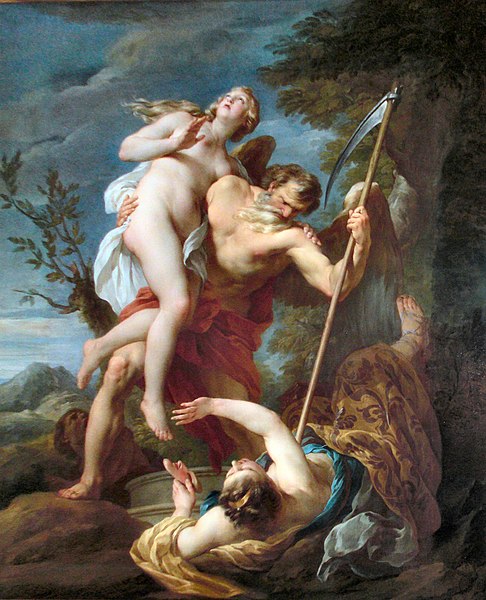
File:Time Saving Truth from Falsehood and Envy.jpgKaty Waldman recently published an article discussing how people's minds tend to grasp at the "low-hanging cognitive fruit" in daily life. She describes how sometimes we accept ideas as facts according their "truthiness" (a term coined by Steven Colbert in 2005). It's an interesting article and I recommend reading it. It makes me wonder about the role of truthiness in health-related behavior.

Colbert has described the notion of truthiness:
It used to be, everyone was entitled to their own opinion, but not their own facts. But that's not the case anymore. Facts matter not at all. Perception is everything. It's certainty. . . . Truthiness is "What I say is right, and [nothing] anyone else says could possibly be true." It's not only that I feel it to be true, but that I feel it to be true. There's not only an emotional quality, but there's a selfish quality.
Waldman surveys some of the evidence for truthiness: how people, instead of analyzing data critically to draw conclusions, sometimes accept ideas based on seemingly unrelated criteria, like the aesthetic presentation of a written message or the familiarity of a message bearer's name.

Within the realm of health behavior, truthiness can be devastating. In epidemiology, for example, it is often said that people who suffer from a condition tend to look for and find a cause, whether one exists or not. Truthiness reminds me of Jenny McCarthy's views on vaccination and autism, which she described during an interview on The Oprah Winfrey Show:
Winfrey: So what do you think triggered the autism [in your son]? I know you have a theory.
McCarthy: I do have a theory.
Winfrey: Mom instinct.
McCarthy: Mommy instinct. You know, everyone knows the stats, which being one in one hundred and fifty children have autism.
Winfrey: It used to be one in ten thousand.
McCarthy: And, you know, what I have to say is this: What number does it have to be? What number will it take for people just to start listening to what the mothers of children who have autism have been saying for years? Which is that we vaccinated our baby and something happened. . . .
McCarthy: Right before his MMR shot, I said to the doctor, I have a very bad feeling about this shot. This is the autism shot, isn’t it? And he said, “No, that is ridiculous. It is a mother’s desperate attempt to blame something on autism.” And he swore at me. . . . And not soon thereafter, I noticed that change in the pictures: Boom! Soul, gone from his eyes.
The post hoc, ergo propter hoc fallacy of the passage has a high truthiness to many, even though scientific bodies have debunked the notion that vaccination causes autism.

How do "truthy" fringe ideas persist and grow in the general population? Deffuant and coworkers in 2002 published a study applying agent-based modeling to analyze the propagation of extremist views. Nigel Gilbert's book describes the study succinctly:
In Duffuant et al's model, agents [individuals] have an opinion . . . and a degree of doubt about their opinion, called uncertainty . . . An agent's opinion segment is defined as the band centered on the agent's opinion, spreading to the right and left by the agent's value for uncertainty. Agents interact randomly. When they meet, one agent may influence the other if their opinion segments overlap. If the opinion segments do not overlap, the agents are assumed to be so different in the opinions that they have no chance of influencing each other. If an agent does influence another, the opinion of one agent (j) is affected by the opinion of another agent (i) by an amount proportional to the difference between their opinions, multiplied by the amount of overlap divided by agent i's uncertainty minus one. The effect of this formula is that very uncertain agents influence other agents less than those that are certain.

 . . . The model shows that a few extremists with opinions that are not open to influence from other agents can have a dramatic effect on the opinions of the majority . . .
In the case of vaccination and autism, the high truthiness (to some) of the idea that MMR vaccine causes autism produces a group of people very certain in their beliefs. Duffuant et al, working within the context of political ideas, show that such a group can impact the opinions of others, thereby propagating their ideas.

Perhaps similar dynamics apply to the case of vaccination, and potentially other health-related memes such as the raw milk movement. I also wonder about the truthiness of the local myths surrounding Ebola and how those might spread more widely, potentially affecting public health in outbreak areas adversely.

(image source: Wikipedia)

Sunday, July 13, 2014

Anti-vaccination movement: Nothing new

PHIL Image 14538I've always thought of the anti-vaccination movement as beginning in the aftermath of the bogus (not to mention fraudulent and retracted) 1998 paper associating vaccines with autism. Recently I've become more interested in the movement and have begun reviewing the associated literature. Perhaps what I've found shouldn't surprise me, but in reality I'm astonished: Notions against vaccination have existed for a long time, and date back to at least the British compulsory vaccination laws of the 19th Century.

Jeffrey Baker describes the history of anti-vaccine movements in a very informative paper on the pertussis vaccine controversy in Great Britain in the late 1970s and early 1980s. His study recounts and analyzes how a 1974 series of case reports describing alleged diphtheria–tetanus–pertussis (DTP) vaccine adverse reactions led to plummeting vaccination rates and a resurgence in disease. The study describes many dynamics taking place then that resonate with events surrounding the MMR vaccine recently. For example,
  • Reports of supposed vaccine injuries were published
  • Vaccine victim/anti-vaccine advocacy groups were formed
  • A number of physicians recommending against vaccination emerged as a group
These and other forces led to a sharp decline in public acceptance of the DTP vaccine then in use and an increased incidence of pertussis, the likes of which had not been observed for 20 years (which is another similarity with the current outbreaks of vaccine preventable disease in the United States).

Importantly, Baker hypothesizes that, although the press played a role in initiating the anti-DTP vaccine movement and attendant epidemics, it was not the only factor. He points out that the British medical profession was deeply divided, "reflecting quite real uncertainties surrounding the safety and efficacy of the vaccine in the 1970s." (Note that although the medical profession isn't presently divided on the issue of the MMR vaccine, there is some reason to think that younger doctors are less likely to believe that vaccines are efficacious and safe than more senior doctors are.) Moreover, he notes that
Parents in vaccine victim advocacy groups played an additional important role in sustaining the crisis. The ambivalence of both public and medical profession . . . are best understood against the background of Britain’s long history of skepticism regarding many vaccines dating back to smallpox.
Here, Baker alludes to the controversy surrounding compulsory smallpox vaccination in the late-19th century in the UK, noting that mandatory vaccination against smallpox virus
. . . represented one of the first intrusions of state public health policy into personal life, and consequently provoked considerable libertarian opposition.
Recent studies by Anna Kata of the tactics and tropes used online by the anti-vaccination movement at present, and of anti-vaccination misinformation on the Internet, reflect many facets of the anti-DTP vaccine movement nearly 40 years ago.

How could ideas opposing vaccination have persisted for well over a century? The phenomenon of groups of people opposing the best public health guidance is not limited to vaccination; other examples include the raw milk movement (which refuses to acknowledge the risk posed by bacterial contamination of raw milk and related products) and the anti-fluoridation movement (which questions the safety of fluoridating public water supplies). As I've mentioned before in this blog, it's critically important to understand such groups and how they make behavioral decisions. It may or not be possible to change their outlooks given such knowledge, but it's hard to imagine doing so without it.

(image source: CDC PHIL image ID#14538)

Tuesday, April 8, 2014

Raw milk, part III: The battle on the Hill

File:United States Capitol dome daylight.jpgI've written previously about the raw milk movement and the dangers of consuming raw milk. Now two bills have been introduced in Congress by Rep. Thomas Massie (Republican, Kentucky). According to the Congressional Research Service, the “Milk Freedom Act of 2014
Prohibits a federal department, agency, or court from taking any action that would prohibit, regulate, or otherwise restrict the interstate traffic of milk or a milk product that is unpasteurized and packaged for direct human consumption if such action is based solely upon a determination that because the milk or milk product is unpasteurized it is adulterated, misbranded, or otherwise in violation of federal law.
The second bill, the “Interstate Milk Freedom Act of 2014
Prohibits a federal department, agency, or court from taking any action that would prohibit, regulate, or otherwise restrict the interstate traffic of milk or a milk product that is unpasteurized and packaged for direct human consumption if: (1) such action is based solely upon a determination that because the milk or milk product is unpasteurized it is adulterated, misbranded, or otherwise in violation of federal law; (2) the milk or milk product's state of origin allows unpasteurized milk or unpasteurized milk products to be distributed for direct human consumption by any means; (3) the milk or milk product is produced, packaged, and moved in compliance with the laws of such state of origin; and (4) the milk or milk product is moved from the state of origin for transport to another state which allows the distribution of unpasteurized milk or unpasteurized milk products for direct human consumption.
The rationale for the two bills? Personal liberty. Politico quotes Rep. Massie as saying
Today, many people are paying more attention to the food they eat, what it contains, and how it is processed. Raw milk, which has been with us for thousands of years, is making a comeback among these discerning consumers. Personal choices as basic as ‘what we feed our families’ should not be limited by the federal government. [Emphasis added.]
It's an argument that has been heard before.

It's important to understand how individuals advocating such positions evaluate the choice between the "right" to endanger themselves and those around them (e.g., children and others to whom they serve raw milk) versus the right to personal and public safety. Certainly this choice exists in other areas of human behavior and legislative decisions have been made to protect public and individual health. For example, drinking and driving is not legal. Nor is driving without a seatbelt in many states. Smoking in public places is strongly curtailed for public health and other reasons. One doesn't have the right to manufacture or possess substances like ricin that are dangerous to self and others.

Why are some more passionate about having access to potentially harmful and deadly raw milk than avoiding infections that can come from it? If you feed raw milk to a child or other individual who doesn't have the capacity or capability to evaluate the risk, isn't that unethical? I've yet to meet anyone who really embraces the prospect of E. coli associated dysentery followed by HUS and renal failure. We must do better as educators and communicate the dangers more effectively, and we must do better at listening so that we can truly understand what raw milk advocates are threatened by.

(image source: Wikimedia Commons)

Thursday, February 27, 2014

Raw milk: The risks

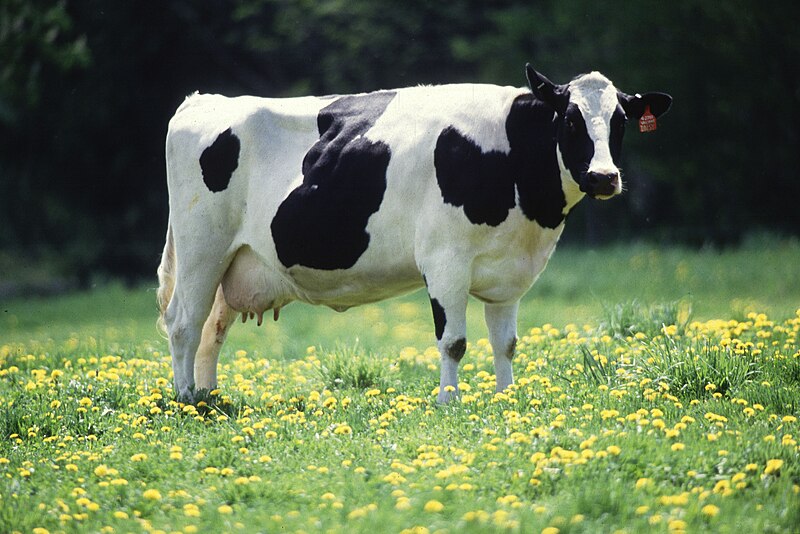
File:Cow female black white.jpgAfter the last post, a colleague suggested that it might be helpful to highlight a few of the dangers of raw milk. So, here's a brief resume.

Drinking raw milk or eating products made from raw milk (e.g., cream, soft cheeses, yogurt, ice cream) can be dangerous if the unpasteurized milk is contaminated with any of a number of pathogens, including Salmonella spp., Escherichia coli, Campylobacter, and Listeria

Salmonella spp. bacteria can cause diarrhea, fever, and abdominal pain. Most people recover without treatment, but some require hospitalization. Recent outbreaks of salmonellosis associated with raw milk include those in Chester County, Pennsylvania, in December 2012 and Texas, in 2010-2011

Escherichia coli can cause a spectrum of disease, including diarrhea and fever, and can progress to bloody diarrhea, dehydration, and hemolytic uremic syndrome (HUS), a severe complication which can cause kidney damage and death. Small children are especially susceptible to HUS. There were outbreaks from raw milk in California in 2006 and Tennessee in 2013.

Campylobacter jejuni can also cause diarrhea, cramping, abdominal pain, and fever. The diarrhea may be bloody and can be accompanied by nausea and vomiting. Cases of campylobacteriosis associated with raw milk consumption were observed in Pennsylvania in 2013.

In fact, Pennsylvania has had several outbreaks of salmonellosis and campylobacteriosis in recent years, including recurrent outbreaks associated with the same producer dairies. A recent MMWR noted:
Repeat outbreaks from raw milk producers are not uncommon and not limited to Campylobacter. During 2005–2013, Pennsylvania experienced 17 salmonellosis and campylobacteriosis outbreaks associated with retail raw milk. Five producers had more than one outbreak during that period. Bacterial contamination of raw milk can occur even under optimal conditions; seasonal changes in bovine bacterial shedding or inadequate quality control during milk collection might contribute to outbreak recurrence. Findings here and elsewhere indicate that compliance with state regulations and increased producer awareness after an outbreak are insufficient to prevent future outbreaks. 
Listeria monocytogenes is known for causing disease in newborns, pregnant women, the elderly, and immunocompromised persons, though people outside these risk groups can also be affected. In pregnant women, listeriosis can cause miscarriage, fetal death, or illness or death of a newborn. Listeria has been found in raw milk in South Dakota in 2014 and illness and death resulted from products made from raw milk in Maryland in 2014.
Brucella spp. bacteria are a threat mostly outside the United States. Recent brucellosis associated with raw milk and related products has been described in Spain, Israel, and France, among many other nations.

Because of the dangers involved, Pennsylvania requires that menus in establishments serving raw milk and related products carry the following disclaimer:
Raw milk has not been processed to remove pathogens that can cause illness. The consumption of raw milk may significantly increase the risk of foodborne illness in persons who consume it -- particularly with respect to certain highly-susceptible populations such as preschool-age children, older adults, pregnant women, persons experiencing illness, and other people with weakened immune systems.
Other states have similar requirements, but as I argued in the last post, it's important to understand why raw milk proponents don't heed the warnings. Only then can we conceive ways to reach out more effectively.

In the meantime, just say no to that raw milk latte.

(image source: Wikipedia)

Wednesday, February 26, 2014

Raw milk and name calling

I've seen several bumper stickers recently espousing the virtues of drinking raw milk. Although selling unpasteurized milk is illegal in most states, you'll find a virtual counterculture that has rejected pasteurization if you search around the Internet. Depending on the website, there are claims that raw milk alleviates allergies, remedies digestive problems, and reduces susceptibility to asthma.

Many of these sources attempt to justify such views with evidence and logic that few clinicians, microbiologists, or public health practitioners would find compelling. In some ways, such views are akin to those voiced from the anti-vaccine movement: They tend to latch on to the occasional, single study with limited findings as scientific validation of their beliefs, while discounting a substantial scientific literature identifying the risks. The truth is that the practice of drinking unpasteurized milk threatens the health of anyone consuming it, especially children and pregnant women.

It's critically important to understand these views (to the extent possible) and not simply write off the people believing them as belonging to a lunatic fringe and call them dumb and stupid. There are raw-milk advocates who eventually come to realize the risks they are taking and change; isn't it better to understand that process and avoid alienating people who might ultimately do the same?

I am reminded of a BMJ Quality & Safety article about Ignaz Semmelweis and the birth of infection control. At the end there is a passage that discusses the inadvisability of trying to convince people of anything by using insults, public humiliation, and haranguing. In talking to (and about) those who advocate drinking raw milk, we should watch the rhetoric. There's a difference between communicating risk and alienating people. Good risk communication can be effective, whereas alienation probably reinforces the behavior in need of modification.

(image source: David Hartley)