Showing posts with label antibiotic resistance. Show all posts

Friday, October 30, 2015

MSSA and MRSA: Both are dangerous!

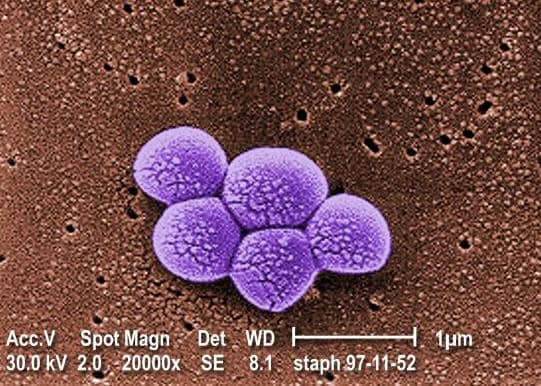
File:Staphylococcus aureus, 50,000x, USDA, ARS, EMU.jpgJessica Ericson and co-workers recently published a remarkable investigation of invasive Staphylococcus aureus infection in hospitalized infants. In it they describe a retrospective multicenter study of 348 NICUs in which a group of 3888 infants suffered invasive S. aureus infection between 1997 and 2012. They compare the demographics and mortality of infants with invasive MRSA and MSSA; determine the relative annual proportions of MSSA and MRSA; and calculate the risk of death after an invasive MSSA and MRSA infection. It's a fascinating study and I recommend reading it.

Among other results, they find that infant mortality following invasive MRSA and MSSA infection is essentially the same. Moreover, in their cohort of patients, MSSA was responsible for a larger burden of disease and death in infants than MRSA. Based on their findings, and consistent with previous studies, the authors recommend that
Measures to prevent S. aureus infection should include MSSA in addition to MRSA.
This is an important point. The goal of infection prevention is to protect patients; both MRSA and MSSA are deadly, so we should be mindful of each. Commonly, patients are screened for MRSA carriage only, and isolated and decolonized if found to be positive. Previous research suggests that it may be possible to reduce the incidence of both MRSA and MSSA infection by screening for S. aureus universally, and this latest study shows why this is critically important.

After drafting this post I realized that Mike Edmond, on the Controversies in Hospital Infection Prevention blog, had already written a great piece in connection with this paper. You should read the post. In it, he captures the issue powerfully in a single line: 
I often joke that I've never had a patient tell me that they don't want a MRSA infection, but they'll take an MSSA infection. 
Indeed, both pathogens deserve attention and respect, as has long been known

(image source: Wikipedia)

Tuesday, January 20, 2015

New antibiotics: Prevention is important, too!

Klebsiella pneumoniaeLosee Ling et al recently described a new antibiotic compound, called teixobactin, that kills pathogens without detectable resistance. The abstract of their study notes that
. . . We developed several methods to grow uncultured organisms by cultivation in situ or by using specific growth factors. Here we report a new antibiotic that we term teixobactin, discovered in a screen of uncultured bacteria. Teixobactin inhibits cell wall synthesis by binding to a highly conserved motif of lipid II (precursor of peptidoglycan) and lipid III (precursor of cell wall teichoic acid). We did not obtain any mutants of Staphylococcus aureus or Mycobacterium tuberculosis resistant to teixobactin. The properties of this compound suggest a path towards developing antibiotics that are likely to avoid development of resistance.
It's a beautiful study, and obviously everybody hopes these implications are realized, and soon; new drugs are very badly needed. Eli Perencevich, writing in the blog Controversies in Hospital Infection Prevention, summarizes some of the important results from the study and also offers an important perspective,
I agree with Dr. William Schaffner's comments in the NY Times as he called the study/method “ingenious” yet also cautioned that "it’s at the test-tube and the mouse level, and mice are not men or women, and so moving beyond that is a large step, and many compounds have failed.” I would add one additional caveat  -- teixobactin had little activity against most Gram-negative bacteria including E. coli, Klebsiella and Pseudomonas. . . . Since the real resistance crisis is in multi drug-resistant Gram-negatives (think CRE, NDM-1), we better get back to digging in the dirt.
Certainly, these and other Gram negatives are important. As I've mused before, it's critically important to research infection prevention approaches in addition to investing in new drug development. We must understand how to prevent infections from occurring and spreading in healthcare (and other) settings before new drugs are introduced. It is clear that we do not possess this understanding, at least on any significant scale or in any sustainable way, at present.

(image source: CDC)

Thursday, October 30, 2014

Planning for the unplannable: What about next time?

A recent article in Forbes, written by Scott Gottlieb, began by observing that
The response by public health officials and local providers to the first case of Ebola diagnosed on U.S. soil has been marked by some tragic missteps. Mistakes have resulted in the avoidable secondary spread of the infection to healthcare workers. This is an appalling outcome to a crisis . . . But, sadly, it should neither be surprising, nor foretell a future marked by continued blunders.
As he suggests, I'd really like to think that the response to the events in Dallas will result in better ED and hospital care. It's important to learn from errors, and this seems to be happening: There's been a dramatic increase in infection control awareness since late September.

That seems like a good thing, but there's more to the picture. Alison Bruzek wrote an interesting piece for NPR last week on how, for hospitals, doing more on Ebola can mean less elsewhere. A passage from the article illustrates the point:
For infection preventionists, a normal routine includes "Looking at the lab results[.] [W]e're looking at what new patients maybe came onto a unit, we're taking calls from the unit, [and answering questions like] 'What do you think I should do about this particular thing?'" says Linda Greene, an infection prevention manager and member of APIC's regulatory review panel. But now, Green says, if the infection preventionist is working on training with personal protective equipment for Ebola, their other tasks aren't getting done as promptly or efficiently as they could be. As a result, Greene [says] the fear is that they'll "miss red flags" for patients with the flu or antibiotic-resistant bacteria.
How can this be avoided? It's difficult for many reasons, including that hospitals, financially speaking, are zero sum propositions: Annual budgets govern allowances for departments. A previous blog discussed the trade off between different infection prevention activities given a constant budget through a fictional story. Bruzek's article highlights how focus here might lead to shortcomings there, all things being equal (i.e., budgets and resources being constant), in a real situation.

One might think that hospitals should simply do a better job of planning for contingencies like the Ebola preparations in which they are now engaged. Perhaps they could, but it's not necessarily simple; budgetary contingencies are usually for things that are random but can be conceived and planned for. Nobody forecast this Ebola event or the implications for US healthcare, and no hospital could rightly be expected to have included Ebola preparations in their fiscal year planning.

Moreover, this situation may have been unplannable. While analyses of public health threats, including bioterrorism, have considered a broad range of issues, I don't have the sense that anyone truly anticipated the extent of the hospital, media, or political issues encountered in the US recently. Nonetheless, the need to prepare for complex unexpected events cannot be denied.

So how do we plan for the unplannable? To address the issues mentioned in Bruzek's article would require specialized human resources and the funds to engage them on a surge basis, in addition to money for PPE. Planning for the availability of such human, material, and financial resources is not easy when they are required randomly, rarely, and -- as in this case -- widely. It's important for public health researchers, professional organizations, and trade groups to study and address such issues, because if there's one thing nature has taught us, it is that there will be a next time.

Sunday, July 6, 2014

Some broad threats to public health

File:Overflowepa.gifA recent Twitter thread highlighted several current threats to public health and I thought the points were sufficiently important to immortalize in a blog -- not necessarily because any one point is of primal importance (although each one alone is stunningly important for public health), but rather because we often forget to think holistically about public health. The reality is, of course, that many areas must combine in order to make good public health possible.

The thread highlighted three elements of public health that are all compromised to some extent at present: the effectiveness of antimicrobial drugs, the coverage of vaccination against vaccine preventable infectious diseases, and the preservation of sanitation infrastructure.

A few words about each of these. The specter of pathogens resistant to current antimicrobial drugs is well known. This topic is widely covered in the news media, in the scientific and medical literature, and even in political discourse. There is also a rich conversation on social media. Much has been written about the coming -- or, if you're a patient infected with a resistant pathogen, the present -- post-antibiotic era. The threat to public health is so great that the issue is now commanding economic and political attention, which hopefully will result in action soon.

And yet, antimicrobial resistance is not the only important threat to public health. The incidence of many vaccine-preventable diseases is increasing, not because pathogens are evolving and becoming mismatched to vaccines, but because significant numbers of people are electing to forgo having children vaccinated. The reasons why are varied and complex, but often they originate in mistrust between people and those who make and provide vaccines. Part of that mistrust was eroded by deeply flawed published research that has since been discredited; meanwhile, the effects and attendant impacts on human health continue. Moreover, vaccines are getting more expensive, and have been for years, which probably doesn't help the goal of increasing coverage, either.

Lastly, the sanitation infrastructure in many US cities is old, undersized, and crumbling. (It's not only the sanitation infrastructure that is failing or threatening to fail; transportation and power distribution are similar stories.) As a result, human waste is frequently released into the environment. This is remarkable for many reasons, not the least of which is that sanitation is one the oldest and most recognized cornerstones of public health. The undesirability of having human excrement handled improperly is so obvious that there's no reason to belabor the point here.

It's tempting to refer to these issues as horsemen of the public health apocalypse, but that would be bombastic and incomplete. There are other important threats, including the safety of the food supply, the high incidence of healthcare associated infections (both susceptible and drug resistant), the growing prominence of chronic diseases of the aging and the attendant demands on healthcare resources, and the continued emergence of new pathogens from nature.

To close, it's good to resurface from the depths of one's own research periodically. It can result in context and perspective, which is badly needed in any field of research. Much has been written about the use of Twitter in healthcare and biomedical research. Maybe this is another: it can force you to come up for air.

(image source: Wikipedia)

Sunday, June 8, 2014

New antibiotics on the horizon: Are we ready?

A previous blog asked:
Photograph depicted a cutaneous abscess,  caused by MRSAWho wouldn't agree that we need an invigorated pipeline of new, effective, and safe antimicrobial drugs to help us counter the specter of resistance? But it does make me wonder: Is it really a good idea to place new weapons in our arsenal when we have demonstrated few reasons to think that we will use them responsibly?
A reinvigoration of the drug pipeline may be starting, given news that a major drug company is re-engaging its research on antibiotics. Moreover, this week we learned about a new highly potent drug, and another one that was just approved by the FDA, for skin infections. Other new drugs are under development as well.

It seems poignant to think about how to make it safe to employ new antibiotics on a wide scale so as not to risk the emergence of new resistance. It's a complex issue, but here are some thoughts.
  • Antimicrobial stewardship programs need to implemented across all healthcare settings. Using antimicrobials in a targeted, appropriate fashion is important for preventing acquisition of new resistance. Progress is being made in some settings (notably children's hospitals), but programs need to be instituted across the board.
  • HAI rates need to be reduced to very low levels across institutions and patient populations. Low rates are important for preventing the spread of resistant infections once they emerge. Substantial opportunities remain to improve infection prevention programs in hospitals.  
  • Patient expectations for drug therapy for common ailments need to be managed. Patients often pressure doctors for antibiotics for common symptoms (e.g., sore throat, congestion), even when etiology (viral versus bacterial) is unclear. Public health messaging, including the use of social media, is important for changing this. 

Undoubtedly, additional things are important as well. I haven't mentioned, for example, the issues surrounding the intensive use of antibiotics in animal farming, the emergence of antibiotic resistance organisms surrounding those practices, and the potential for causing human colonization and disease. If you have additional thoughts, please comment.

An important question is how we can measure progress in these areas. Surveillance for antimicrobial stewardship policy compliance and HAI rates within an institution seems more straightforward than monitoring these across regions. Likewise, monitoring public perception and expectations for antibiotic prescribing practice is complex. Perhaps this is an area where social media monitoring can play a role. Regardless of the difficulties, measuring such things is critical if we are to manage drug resistance moving forward.

(image source: CDC)

Wednesday, April 30, 2014

Update: Vaccines as a tool in the post-antibiotic era

Embedded image permalinkAfter posting the piece on vaccines yesterday, a new study by BA Diep et al was brought to my attention in which the surface proteome of a prevalent strain of MRSA was determined. Work such as this is important for identifying potential antigen combinations that could be included in future multicomponent Staphylococcus aureus vaccines.

Moreover, today the WHO published a report on antimicrobial resistance. It notes, inter alia, that
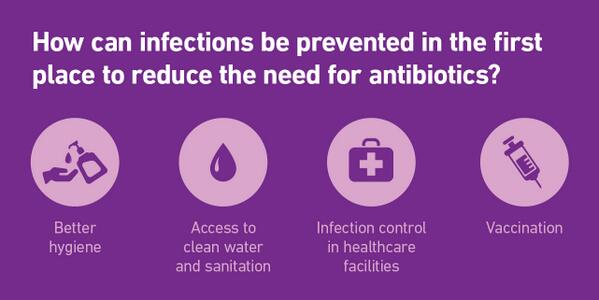
Greater emphasis should be placed on prevention, including strengthening hygiene and infection prevention and control measures, improving sanitation and access to clean water, and exploring a more widespread use of vaccines. Although preventive vaccines have become available for several bacterial infections, their application is still limited.
It's clear that a multifaceted approach is needed to deal with the antimicrobial resistance problem. The WHO study, and related commentary, helps to frame and build awareness of the issue. New vaccines could help.

(image source: WHO)

Tuesday, April 29, 2014

Vaccines: A tool for the post-antibiotic era?

PHIL Image 14537In honor of World Immunization Week this week, I recently read two books by Paul Offit: Vaccinated: One Man's Quest to Defeat the World's Deadliest Diseases and The Cutter Incident: How America’s First Polio Vaccine Led to the Growing Vaccine Crisis. Both are excellent. Vaccinated is essentially a biography of Maurice Hilleman, but it also reviews how several of the important vaccines currently in use were developed and marketed. The Cutter Incident tells the story of incompletely inactivated lots of polio vaccine manufactured by Cutter Laboratories, which caused 40,000 cases of polio nationwide in 1955, including 200 cases of paralysis and 10 deaths. There are many pearls and much wisdom to be found in the pages of these two books; I recommend reading them.

Certainly the utility of vaccines is well demonstrated and their development and application is one of the major accomplishments of modern medicine. In the US alone the improvement of population health as vaccines have become available is remarkableGlobally, it has been estimated that vaccines prevent nearly 6 million deaths annually worldwide.

The books got me thinking about future potential vaccines. In one passage, Offit recounts the development of a pneumococcal vaccine and quotes Robert Austrian talking about the rationale for his work:
The only alternative then to protect those at high risk of early death is to prevent them from becoming ill.
This beautiful and simple idea -- a medical and public health truism if ever there was one ("an ounce of prevention is worth a pound of cure") -- strikes me as relevant to HAI and antibiotic resistant infections. Think what healthcare might be like if there were vaccines for many of the bacterial infections that are currently problematic and often resistant to antibiotics, like Staphylococcus aureus, Clostridium difficile, and Neisseria gonorrhoeae.

Several antibacterial vaccines are available, including ones for pertussis, tetanus, diphtheria, meningococcus, pneumococcus, Haemophilus influenzae type b (Hib) disease, cholera, typhoid, and anthrax. However, there are reasons that vaccines for S. aureus, C. diff, and N. gonorrhoeae (as well as others) don't yet exist. For one, the immunology can be complex, as Offit explains in the discussion of the pneumococcal vaccine. Proctor describes the situation for Staph aureus in a recent review, as do Fowler and Proctor in another review. Also, the cost of developing, testing, and licensing can be steep relative to the profits of a licensed, marketed vaccine. Yet another issue is the specter of adverse events, both real and perceived. On this point, Offit notes that
. . . a technology that would clearly save lives sits on the shelf. "We could make a group B strep vaccine tomorrow," said one senior pharmaceutical company scientist. "But it would have to be given to pregnant women and we couldn't handle the liability." 
Dempsey et al offers a recent, interesting, and partially validating study to this view of a potential group B strep (GBS) vaccine. Such issues are difficult.

That being said, perhaps vaccines should be emphasized more in the conversation regarding antibiotic resistance. I've wondered in the past about the effectiveness of developing new antibiotics when there seems to be little reason to believe, given the past track record, that they will be used responsibly. A new generation of antibiotic drugs could become useless within a few years if effective antibiotic stewardship isn't practiced globally. Vaccines, if they could be made, may offer protection against what may soon be untreatable infections. Or put differently, perhaps vaccines could be an important tool in a post-antibiotic era.

Of course, there are issues to be better understood and addressed. Recent work illustrates that Bordetella pertussis is evolving in response to the vaccine, raising the possibility that future vaccines may be associated with similar dynamics. Also, vaccines to human commensals like Staphylococcus aureus might promote overgrowth of other commensal organisms. Studies have investigated this for the case of Streptococcus vaccination and MRSA colonization and infection. Moreover, it's unclear whether people would really embrace more vaccinations given the current and recent climate surrounding vaccines.

Regardless, one seldom hears about vaccines in the conversation about antibiotic resistance. It seems like funding should address making new vaccines as well as development of new antibiotic drugs -- because Robert Austrian was right. 

(image source: CDC/PHIL)

Wednesday, March 12, 2014

Infection prevention knowledge: Permutations on "known" and "unknown"

http://upload.wikimedia.org/wikipedia/commons/b/bc/E_coli_at_10000x%2C_original.jpgPathogens are everywhere, and we are increasingly aware of how widely they can be disseminated in healthcare environments. Researchers have found, for example, that
  • Well-child visits are a risk factor for subsequent influenza-like illness visits. Infections are thought to spread in waiting and exam rooms.
  • Hospital water taps can be contaminated with bacteria including Legionella spp., Acinetobacter spp. and other Gram-negatives. 

The list could go on and on. We know that many pathogens can persist on surfaces for a considerable time, and while it's not clear the extent to which contaminated surfaces play a role in HAI in general, there is reason to believe they are important in many infections. The unfortunate reality is that patients suffer nosocomial infection; contaminated surfaces can only add to the risk of infection.

I never thought I'd invoke Donald Rumsfeld in a discussion of infection control, but he once described a useful construct for thinking about infection prevention (among other things). He's quoted as saying
. . . there are things we know that we know. There are known unknowns; that is to say, there are things that we now know we don't know. But there are also unknown unknowns – there are things we do not know we don't know.
If we add another, obvious, category -- things we don't know that we know -- then a 2x2 table can be written for types of knowledge. Done for infection prevention and control, it might look like the table below.

It would be interesting to organize what we know and don't know into such a table. That's a big thing to do; it requires assessing what specific practices are truly evidence-based ("known knowns", like have been described for central line infections and ventilator-associated pneumonia), identifying best practices that aren't necessarily well studied ("unknown knowns"), and enumerating gaps in our knowledge ("known unknowns", such as the role of contaminated surfaces in HAI). Of course, we can never identify the things we don't realize that we don't know (the "unknown unknowns"), but the hope would be to ultimately understand the other three quadrants well enough so that we are sure that the unknown unknowns aren't important. Obviously, that's hard to do.  

It seems to me that seriously trying to fill in the quadrants is an important step towards a complete theoretical picture of infection. Probably the "known knowns" quadrant is smaller than we would hope, and the "known unknowns" quadrant is significant. I wonder how large the "unknown knows" category -- the things we don't realize we know -- is?

(image source: the E. coli micrograph, Wikipedia; the 2x2 table, David Hartley)