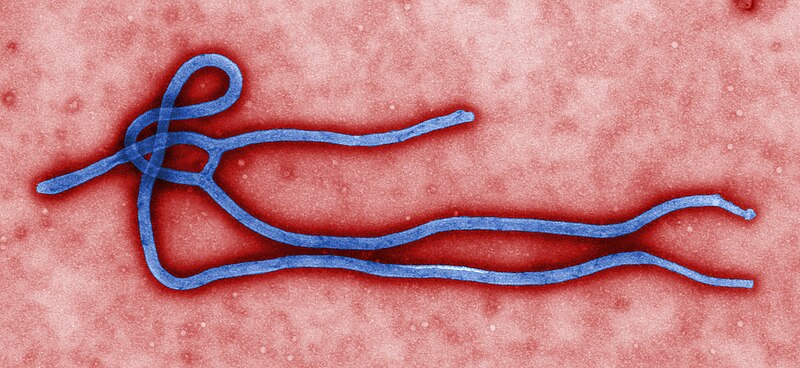
 The current outbreak of Ebola hemorrhagic fever in western Africa has been
ongoing for months. It is a remarkable and tragic event. Sadly,
there is no known cure, the case fatality proportion is high (historically 50-90%), and
prevention is difficult in the areas where the virus is currently spreading.
The current outbreak of Ebola hemorrhagic fever in western Africa has been
ongoing for months. It is a remarkable and tragic event. Sadly,
there is no known cure, the case fatality proportion is high (historically 50-90%), and
prevention is difficult in the areas where the virus is currently spreading. be alert for signs and symptoms of EVD [Ebola virus disease] in patients with compatible illness who have a recent (within 21 days) travel history to countries where the outbreak is occurring, and should consider isolation of those patients meeting these criteria, pending diagnostic testing.Infection control procedures are standard and the necessary supplies are plentiful in Western hospitals, making it unlikely that an Ebola patient would cause secondary infections in healthcare settings.
Moreover, Ebola virus is much less transmissible than many other viruses. Measles virus, for example, has basic reproduction ratios in the range of 11-18, whereas those for Ebola have been estimated to be between 1-2. For comparison, the basic reproductive ratio for influenza is estimated to be 3-4, for rubella 6-7, and for chickenpox 10-12. The ratio for pertussis is similar to that of measles. One wonders what the basic reproduction ratio is for the current outbreak in Africa is (and if analytic approaches using social media might be helpful for estimating it).
Given that the current outbreak is so large compared to past outbreaks of Ebola, we might learn some lessons about this exotic disease. For example, are there transmission pathways that we don't know of at present? Aerosol transmission is thought to play only a minor role if any in transmission of human strains of Ebola virus, but perhaps new information will emerge from future epidemiological studies of the current outbreak.

