Showing posts with label CDC. Show all posts

Thursday, July 31, 2014

Ebola: Thoughts on a public health disaster

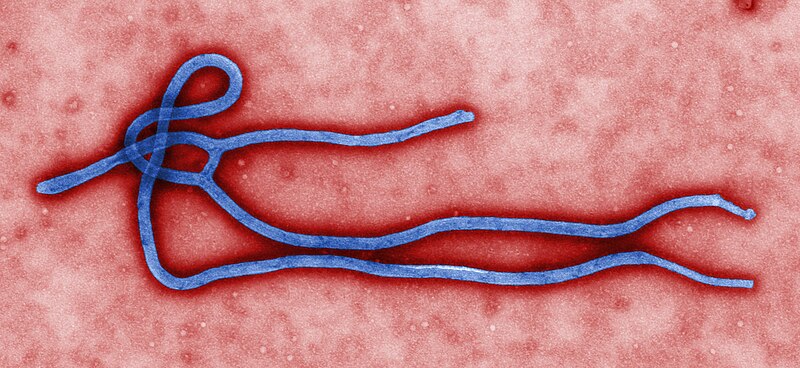
File:Ebola virus virion.jpgThe current outbreak of Ebola hemorrhagic fever in western Africa has been ongoing for months. It is a remarkable and tragic event. Sadly, there is no known cure, the case fatality proportion is high (historically 50-90%), and prevention is difficult in the areas where the virus is currently spreading.

Nations outside Africa are now recognizing the possibility of Ebola-infected travelers returning home. Importation of disease is a public health issue for other infections, such as measles, outbreaks of which are commonly sparked by visitors returning from areas where cases are prevalent. In the case of Ebola, one traveler died on the last leg of a West African trip, before returning home to Minnesota, so there's good reason to believe that importation could occur. It's probably unlikely, however, given the current level of awareness. Some African airlines, for example, have curtailed air service in affected areas and are screening passengers for signs of illness. International guidance on passenger screening is being evaluated as well. Moreover, CDC has issued interim guidance regarding Ebola for airline flight crews, cleaning personnel, and cargo personnel.

If an infected or infectious traveler does return, is it unlikely to result in the dramatic transmission currently observed in Africa. The current heightened awareness makes it very likely that travelers returning from affected areas would be evaluated for possible Ebola infection should they develop illness and present to a healthcare provider. The CDC has issued guidance advising healthcare workers to
be alert for signs and symptoms of EVD [Ebola virus disease] in patients with compatible illness who have a recent (within 21 days) travel history to countries where the outbreak is occurring, and should consider isolation of those patients meeting these criteria, pending diagnostic testing. 
Infection control procedures are standard and the necessary supplies are plentiful in Western hospitals, making it unlikely that an Ebola patient would cause secondary infections in healthcare settings.

Moreover, Ebola virus is much less transmissible than many other viruses. Measles virus, for example, has basic reproduction ratios in the range of 11-18, whereas those for Ebola have been estimated to be between 1-2. For comparison, the basic reproductive ratio for influenza is estimated to be 3-4, for rubella 6-7, and for chickenpox 10-12. The ratio for pertussis is similar to that of measles. One wonders what the basic reproduction ratio is for the current outbreak in Africa is (and if analytic approaches using social media might be helpful for estimating it).

Given that the current outbreak is so large compared to past outbreaks of Ebola, we might learn some lessons about this exotic disease. For example, are there transmission pathways that we don't know of at present? Aerosol transmission is thought to play only a minor role if any in transmission of human strains of Ebola virus, but perhaps new information will emerge from future epidemiological studies of the current outbreak.

What is for sure is that the events in Africa are a tremendous human tragedy. I hope that the desperate measures of closing schools and nonessential government services will help to control the spread of the virus. It isn't clear that it will.

(image source: Wikipedia)

Wednesday, April 2, 2014

Hand washing, rubbing, and posters

Every now and then one sees something that is obviously well intentioned and potentially even effective, but that is problematic nonetheless. A case in point is the poster shown at the right, proclaiming that "Alcohol-based handrubs kill bacteria more effectively than soap and water." Certainly they do, but that's not the point of handwashing with plain soap and water.

The purpose of handwashing with plain soap is to mechanically remove foreign material and microorganisms from the surface of the skin. It is not to kill microbes. Plain soaps have minimal, if any, antimicrobial activity. The purpose of alcohol-based handrubs (ABHRs) is to reduce the microbial burden on the skin to a safe level through the antimicrobial action of alcohol. Because handrubs do not remove organic material, they are not a substitute for washing visibly soiled hands. Moreover, ABHRs don't kill spore forming microorganisms such as Clostridium difficile or certain other pathogens of public health importance. Handwashing with soap and water is needed to remove such contamination. Antimicrobial soap combines the cleaning action of regular soap with antiseptic activity. 

These and related issues, such as when the different approaches are best used, are well covered by Manfred Rotter in chapter 91 of the 4th edition (2012) of the expansive text Hospital Epidemiology and Infection Control. Additional information can be found in the WHO guidelines on hand hygiene in healthcare and at a related CDC website. 

In the case of the poster above, it is available at a URL that is part of an interactive education module on hand hygiene for professional HCWs. The training itself, consistent with the poster, advises (on slide #19) that plain soaps are "good" at killing bacteria whereas ABHRs are "best" and antimicrobial soaps fall in between. I can't find evidence that plain soap kills bacteria or any other pathogen. Rather, plain soap removes pathogens by acting as a surfactant or detergent, and this seems to be well established in the literature. Perhaps "Remember to wash your hands -- Soap removes germs!" or "Alcohol-based hand rubs are often an effective alternative to soap for making your hands safe!" would have been more evidence-based, defensible, and constructive messages for a poster.

More importantly, if the overarching objective of hand hygiene -- preventing transmission of microorganisms via the hands -- is to be achieved, an awareness of the issues involved in the various approaches is needed. Knowing when to wash versus rub, and why, seems relevant to communicate widely.

(image source: CDC)