Showing posts with label zoonoses. Show all posts

Saturday, October 24, 2015

Rift Valley fever and the problem of forecasting

https://upload.wikimedia.org/wikipedia/commons/e/e6/Great_Rift_Valley_NASA.jpg
The notion that prediction is difficult, especially about the future, is absolutely true in the domain of infectious disease. Despite the difficulty we must try, and I think there's reason for hope, given recent studies utilizing powerful machine learning techniques and diverse data. There's much innovation being brought to the issue.

Recently, a topic I've written about in the past has appeared in the news: Forecasting of Rift Valley fever (RVF) in East Central Africa. Bernard Bett has written a thoughtful piece on the PLoS Translational Global Health blog, which I recommend reading, examining the gamut of public health tools and responses needed in order to combat RVF. He begins by framing the issue succinctly, 
Recent climate predictions suggest East Africa may be in line for an epidemic of Rift Valley fever -- an infectious disease which can hit people, their livestock and livelihoods, and national economies hard. Data from the Climate Prediction Centre and the International Research Institute for Climate and Society suggest there is a 99.9% chance there will be an El Niño occurrence this year, with a 90% chance it will last until March/April 2016. At least two of the most recent Rift Valley fever epidemics in East Africa -- those in 1997/98 and 2006/2007 -- were associated with El Niño weather patterns, with Kenya suffering losses amounting to US$32 million in the most recent. Given the strong predictions of an El Niño occurrence, and the established association between El Niño and Rift Valley fever risk, countries in the Horn of Africa need to start laying out measures to manage the developing risk. . . 
The health, economic, and social costs of this disease are well known and there is a wealth of research establishing both RVF epidemiology and its strong ties to climate (including El Niño) and the environment. Nonetheless, there was little early response undertaken given remotely sensed (i.e., satellite-based) RVF forecasting in 2006-07. Peter Roeder described the situation in a 2007 ProMED post (archive 20070112.0164),
It is interesting, if rather disheartening, to watch another RVF epizootic emerge and evolve in eastern Africa and to note that it is such a close recapitulation of events that occurred in 1997/8 and decades before. It is a recapitulation not only with respect to disease evolution but also in terms of national and international preparedness—or lack of it. Those who followed ProMED in those days will be aware that the epizootic attracted intense international attention and was closely reported in postings, which contain much useful information. Despite seminal work on developing early warning systems based on remote sensing . . . it seems that the capacity to respond has not improved greatly in the high-risk countries in Africa. 
We are presently seeing the emergence of a very powerful El Niño, possibly one of the strongest in the historical record, and this was forecast in mid-August of this year. While such a climate forecast, especially when combined with other data, could reasonably be interpreted as a 2-3 month warning of the potential for RVF in parts of Africa, it's important to appreciate the complexity of acting on such information. As I wrote in 2012,
A recent, comprehensive set of case studies of the 2006–2007 outbreak in East Central Africa was published in the American Journal of Tropical Medicine and Hygiene (August 2010), and many of the nuances are described there. For example, current preparations of the Smithburn vaccine have a shelf life of approximately 4 years. Outbreaks in the Horn of Africa region occur aperiodically, with a mean of near 10 years between outbreaks. Veterinary health authorities cannot spend scarce resources on continually replenishing a stock of RVF vaccine when other needs are present continuously. Nor can manufactures maintain large stocks that are likely to expire before sale. Thus, vaccine may not be available at any given time. Nonetheless, waiting until there is a need to manufacture vaccine is problematic.
In other words, although vaccination is a powerful strategy for protecting against RVF virus transmission, maintaining vaccine stocks isn't straightforward. Moreover, simply having vaccine available isn't enough: Effective and safe administration triggered by any early warning, such as the one described in the impressive study of Anyamba et al in 2009, is complicated. In the case of the 2006-07 outbreak, for example, by the time a warning was issued, early outbreak areas were already inundated by rains, making travel and delivery of supplies difficult. In fact, in some scenarios it may take up to 150 days from a RVF vaccine order until the successful acquisition of vaccine-associated herd immunity -- much greater than the few weeks of advanced warning the state of the art can current supply. (Note: There's a distinction between a statistical forecast for a specific disease and simply noting that the strongest El Nino in decades is going to mess with everything.)

If a disease forecast is to have impact, many factors must come into alignment, including the forecast supplying sufficient lead time, decisionmakers having enough confidence in the forecast to act, and the existence of a public health infrastructure capable of supporting an effective (and potentially complex) response. These are important issues to keep in mind when thinking about surveillance and early warning, regardless of the disease and setting.

(image source: Wikipedia)

Saturday, June 21, 2014

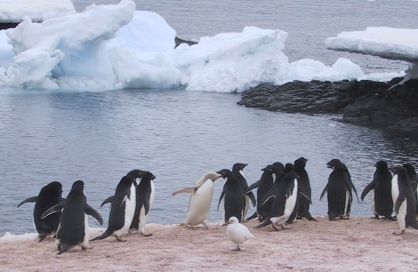
Penguins get sick, too

http://upload.wikimedia.org/wikipedia/commons/0/05/Penguins_on_Gourdin_Island.jpg
If you are intrigued by penguins, like I am, you may find this post of interest. After nearly 40 pieces related to human infection, it seemed okay to take a short break. 

I wondered recently: what pathogens infect penguins? There doesn't seem to be a large research literature on the topic, but what I found suggests that they suffer from, or at least carry, several. One study observed that some penguin species can be infected with Newcastle disease virus, infectious bursal disease virus (IBDV), and avian poxvirus. Recently it was observed that influenza viruses (H11N2) circulate in wild penguin populations (and that these viruses are genetically very distinct from avian flu viruses elsewhere in the world). Penguins can become ill with aspergillosis, and they can also suffer avian malaria caused by Plasmodium elongatum and P. relictum. Malaria seems to be a large issue for penguins in captivity.

The habitats of many penguin species tend not to overlap much with people's living spaces, though there are exceptions, like in the case of the blue penguin of southern Australia and New Zealand, which sometimes nests under houses. I suspect that it's unlikely that there is a threat to humans from infections carried by penguins, though I do wonder about ecotourism as a vector of infection to penguins. This has been discussed recently in connection with human metapneumovirus in gorillas.

If you like penguins and are interested in learning more, there is an exhaustive article on the diseases of penguins in the New Zealand Ministry of Agriculture and Forestry's Surveillance publication from December, 2001.

(image source: Wikipedia)

Thursday, February 27, 2014

Raw milk: The risks

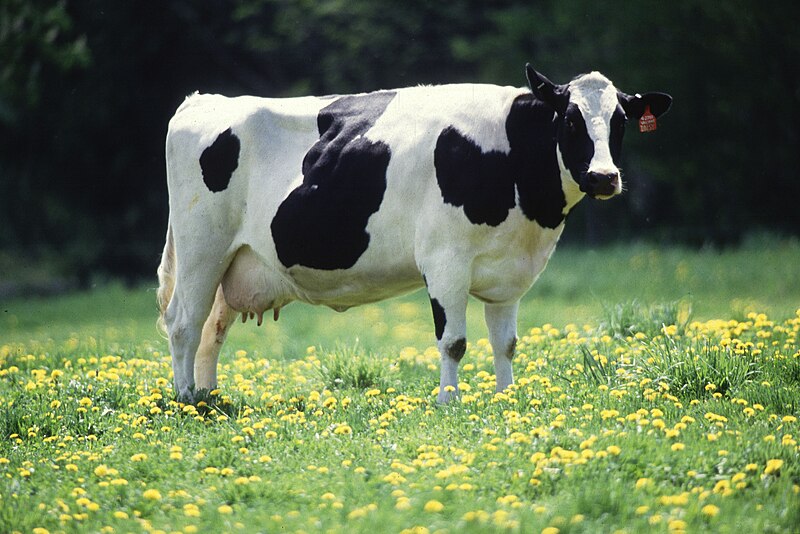
File:Cow female black white.jpgAfter the last post, a colleague suggested that it might be helpful to highlight a few of the dangers of raw milk. So, here's a brief resume.

Drinking raw milk or eating products made from raw milk (e.g., cream, soft cheeses, yogurt, ice cream) can be dangerous if the unpasteurized milk is contaminated with any of a number of pathogens, including Salmonella spp., Escherichia coli, Campylobacter, and Listeria

Salmonella spp. bacteria can cause diarrhea, fever, and abdominal pain. Most people recover without treatment, but some require hospitalization. Recent outbreaks of salmonellosis associated with raw milk include those in Chester County, Pennsylvania, in December 2012 and Texas, in 2010-2011

Escherichia coli can cause a spectrum of disease, including diarrhea and fever, and can progress to bloody diarrhea, dehydration, and hemolytic uremic syndrome (HUS), a severe complication which can cause kidney damage and death. Small children are especially susceptible to HUS. There were outbreaks from raw milk in California in 2006 and Tennessee in 2013.

Campylobacter jejuni can also cause diarrhea, cramping, abdominal pain, and fever. The diarrhea may be bloody and can be accompanied by nausea and vomiting. Cases of campylobacteriosis associated with raw milk consumption were observed in Pennsylvania in 2013.

In fact, Pennsylvania has had several outbreaks of salmonellosis and campylobacteriosis in recent years, including recurrent outbreaks associated with the same producer dairies. A recent MMWR noted:
Repeat outbreaks from raw milk producers are not uncommon and not limited to Campylobacter. During 2005–2013, Pennsylvania experienced 17 salmonellosis and campylobacteriosis outbreaks associated with retail raw milk. Five producers had more than one outbreak during that period. Bacterial contamination of raw milk can occur even under optimal conditions; seasonal changes in bovine bacterial shedding or inadequate quality control during milk collection might contribute to outbreak recurrence. Findings here and elsewhere indicate that compliance with state regulations and increased producer awareness after an outbreak are insufficient to prevent future outbreaks. 
Listeria monocytogenes is known for causing disease in newborns, pregnant women, the elderly, and immunocompromised persons, though people outside these risk groups can also be affected. In pregnant women, listeriosis can cause miscarriage, fetal death, or illness or death of a newborn. Listeria has been found in raw milk in South Dakota in 2014 and illness and death resulted from products made from raw milk in Maryland in 2014.
Brucella spp. bacteria are a threat mostly outside the United States. Recent brucellosis associated with raw milk and related products has been described in Spain, Israel, and France, among many other nations.

Because of the dangers involved, Pennsylvania requires that menus in establishments serving raw milk and related products carry the following disclaimer:
Raw milk has not been processed to remove pathogens that can cause illness. The consumption of raw milk may significantly increase the risk of foodborne illness in persons who consume it -- particularly with respect to certain highly-susceptible populations such as preschool-age children, older adults, pregnant women, persons experiencing illness, and other people with weakened immune systems.
Other states have similar requirements, but as I argued in the last post, it's important to understand why raw milk proponents don't heed the warnings. Only then can we conceive ways to reach out more effectively.

In the meantime, just say no to that raw milk latte.

(image source: Wikipedia)

Thursday, January 30, 2014

The usual suspects: Fluffy can make you sick

Large scale livestock production in conjunction with the widespread use of antibiotics to promote animal growth has resulted in the emergence of antibiotic resistant bacteria in farm animals. People who work on and live near such farms are exposed to the resulting pathogens. Smith et al observed that both pigs and the farm workers who raise them in the American Midwest can become colonized with MRSA. Voss et al reported MRSA prevalence among pig farmers that was more than 760 times higher than that among patients admitted to Dutch hospitals. Moreover, a recent study by Carrel and coworkers shows an association between people's proximity to concentrated animal-feeding operations and colonization with MRSA.

These studies, along with many others, illustrate the point that if we blast animals with antibiotics, then we should expect that the environment and people inhabiting it will be exposed to antibiotic resistant pathogens. Recognizing the risks involved, in 2006 the European Union banned the use of antibiotics to fatten farm animals. Denmark went even further and eliminated their use for disease prevention in livestock. In the US, the FDA recently described steps aimed at reducing antibiotic use in agriculture. Hopefully the proposed rules will be adopted and result in decreased use.

I think of the farm and antibiotics issue as being part of a larger thing: the nexus of animal and human health. This idea is often described as "One Health", which recognizes that human, animal, and environmental health are all linked.

And by "animal" we don't only mean livestock. I don't ordinarily think of Staph as a zoonosis, but it is. In fact, several studies have observed human infection associated with companion animals. A review by Day et al highlighted the remarkable spectrum of infectious diseases of dogs and cats that are shared by humans (including Staphylococcus spp.). More recently, Vincze et al described an alarming rate of MRSA in wound samples taken from companion animals in Germany.

It's important to realize that pets get antibiotics, too. Lots, it appears. Writing in 2005, Heuer et al observed that
 . . . a comparatively small number of companion animals (550,000 dogs and 650,000 cats) consume approximately the same amount of fluoroquinolones and cephalosporins as consumed annually in the much larger population of food animals in Denmark (23 million slaughter pigs, 130 million broiler chickens, and 1.2 million cattle and dairy cows). We do not believe that antimicrobial drugs are more generously prescribed for companion animals in Denmark than in other industrialized countries.
This is something that needs to be borne in mind. Overuse of antibiotics in companion animals also carries risks to human health, especially when you think about the frequent contact owners have with their pets.

So the next time Fluffy is feeling down, think twice before asking the vet for antibiotics.

(image source: David Hartley) 

Wednesday, January 15, 2014

Will the real hantavirus please stand up?


deer mousePeople often talk about "the" hantavirus. In the US, often they are referring to Sin Nombre virus, which was first recognized in connection with a 1993 outbreak of ARDS in the Four Corners region of the American Southwest. Infection occurs through contact with infected rodents, their urine and droppings, or the remains of infected rodents.

It's important to recognize, however, that SNV is one of several New World hantaviruses circulating in the US. Others include Bayou virus, Black Creek Canal virus, Monongahela virus, and New York virus.

Hantavirus pulmonary syndrome (HPS) is a reportable disease in the US. A recent study by Knust and Rollin showed that in two decades of surveillance, over 600 cases of HPS have been reported. More than 90% of those cases occurred in western states, and most cases were associated with SNV, though cases caused by these other viruses were also reported.

There is much information at the CDC site on hantaviruses and in the medical literature. The diversity and distribution of hantaviruses in South America and other parts of the world is also complex.

So, when you hear people talk about "the" hantavirus, perhaps you could capitalize on the teachable moment?

(image source: CDC)