Thursday, July 31, 2014

Ebola: Thoughts on a public health disaster

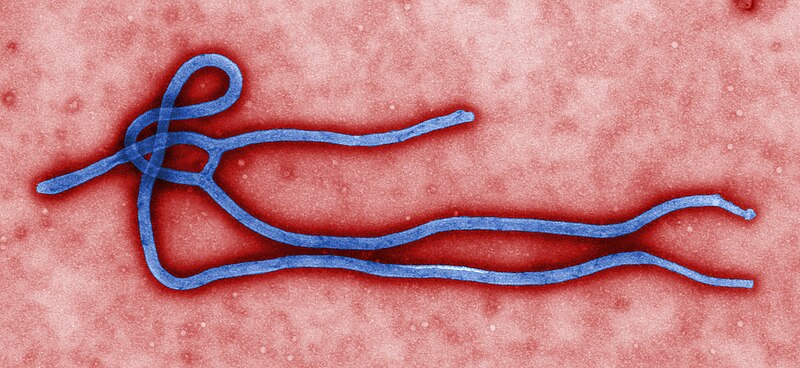
File:Ebola virus virion.jpgThe current outbreak of Ebola hemorrhagic fever in western Africa has been ongoing for months. It is a remarkable and tragic event. Sadly, there is no known cure, the case fatality proportion is high (historically 50-90%), and prevention is difficult in the areas where the virus is currently spreading.

Nations outside Africa are now recognizing the possibility of Ebola-infected travelers returning home. Importation of disease is a public health issue for other infections, such as measles, outbreaks of which are commonly sparked by visitors returning from areas where cases are prevalent. In the case of Ebola, one traveler died on the last leg of a West African trip, before returning home to Minnesota, so there's good reason to believe that importation could occur. It's probably unlikely, however, given the current level of awareness. Some African airlines, for example, have curtailed air service in affected areas and are screening passengers for signs of illness. International guidance on passenger screening is being evaluated as well. Moreover, CDC has issued interim guidance regarding Ebola for airline flight crews, cleaning personnel, and cargo personnel.

If an infected or infectious traveler does return, is it unlikely to result in the dramatic transmission currently observed in Africa. The current heightened awareness makes it very likely that travelers returning from affected areas would be evaluated for possible Ebola infection should they develop illness and present to a healthcare provider. The CDC has issued guidance advising healthcare workers to
be alert for signs and symptoms of EVD [Ebola virus disease] in patients with compatible illness who have a recent (within 21 days) travel history to countries where the outbreak is occurring, and should consider isolation of those patients meeting these criteria, pending diagnostic testing. 
Infection control procedures are standard and the necessary supplies are plentiful in Western hospitals, making it unlikely that an Ebola patient would cause secondary infections in healthcare settings.

Moreover, Ebola virus is much less transmissible than many other viruses. Measles virus, for example, has basic reproduction ratios in the range of 11-18, whereas those for Ebola have been estimated to be between 1-2. For comparison, the basic reproductive ratio for influenza is estimated to be 3-4, for rubella 6-7, and for chickenpox 10-12. The ratio for pertussis is similar to that of measles. One wonders what the basic reproduction ratio is for the current outbreak in Africa is (and if analytic approaches using social media might be helpful for estimating it).

Given that the current outbreak is so large compared to past outbreaks of Ebola, we might learn some lessons about this exotic disease. For example, are there transmission pathways that we don't know of at present? Aerosol transmission is thought to play only a minor role if any in transmission of human strains of Ebola virus, but perhaps new information will emerge from future epidemiological studies of the current outbreak.

What is for sure is that the events in Africa are a tremendous human tragedy. I hope that the desperate measures of closing schools and nonessential government services will help to control the spread of the virus. It isn't clear that it will.

(image source: Wikipedia)

Monday, July 21, 2014

Software and computing: How far we've come in a very short time

File:Computer-aj aj ashton 01.svgWhen I was in graduate school in the early 1990s, DEC and SGI Unix workstations were the hottest things around. We programmed in Fortran 77 mostly, and occasionally in Matlab® and Macsyma. As I recall, the different machines had up to a few 100 megabytes of RAM and processor speeds up to a few hundred MHz. I had grown up programming some of the first personal computers, which were very modest by comparison, and using these computers made me feel as if almost anything could be achieved computationally. Such machines cost well over $10K and the operating systems were proprietary, licensed, and expensive -- as were most of the useful applications.

Today, fast, high capacity, multi-core Linux machines are cheap. They can run Fortran and other traditional languages such as C, which are now available for free, as well as new open source packages like R and the Python language. Many of these packages are highly developed and are continuously under expansion and refinement. Libraries exist for nearly any conceivable computational problem. There are even open source analogues of Matlab® (Octave) and Macsyma (Maxima).

Very advanced methods of computation are now widely available for low cost. A major reason this has happened has been the open source software movement, the ideas of which extend now to making data and research codes used in published studies available for others to use. 25 years ago, when beginning research on a new problem, one commonly had to write new code from scratch. Today, one can turn to blogs or GitHub to look for codes that can be adapted for the problem at hand, radically shortening the code development, testing, and validation cycle. Recent work emphasizing the reproducibility and transparency of computational science promises to extend such progress farther still.

Such developments allow applications and methods to be shared and applied very broadly and across research fields. It's not uncommon for methods and codes developed for engineering, physics, and finance, for example, to be applied to problems in biology, medicine, and public health. Instead of writing code to translate abstract or unfamiliar equations into a local implementation, one often only has to install a library or find and download code (e.g., from GitHub or an online open source journal), possibly revise, and then apply to data. More time can be spent on thinking and communicating science, instead of coding and computing.

With these advances come dangers as well, but these dangers are manageable. For example, undetected bugs in codes can quickly threaten the integrity of results across multiple fields -- a frightening proposition. Similarly, it is also possible to use methods and codes in ways that are theoretically incorrect or unjustified if one doesn't understand the basis and limitations of those methods and codes. Such dangers are nothing new in science, and highlight the importance of working with others who are expert in new methods.

Current trends will only increase the computational capabilities available. It's an exciting time to work in mathematical and computational methods in biomedical science.

(image source: Wikipedia)

Sunday, July 13, 2014

Anti-vaccination movement: Nothing new

PHIL Image 14538I've always thought of the anti-vaccination movement as beginning in the aftermath of the bogus (not to mention fraudulent and retracted) 1998 paper associating vaccines with autism. Recently I've become more interested in the movement and have begun reviewing the associated literature. Perhaps what I've found shouldn't surprise me, but in reality I'm astonished: Notions against vaccination have existed for a long time, and date back to at least the British compulsory vaccination laws of the 19th Century.

Jeffrey Baker describes the history of anti-vaccine movements in a very informative paper on the pertussis vaccine controversy in Great Britain in the late 1970s and early 1980s. His study recounts and analyzes how a 1974 series of case reports describing alleged diphtheria–tetanus–pertussis (DTP) vaccine adverse reactions led to plummeting vaccination rates and a resurgence in disease. The study describes many dynamics taking place then that resonate with events surrounding the MMR vaccine recently. For example,
  • Reports of supposed vaccine injuries were published
  • Vaccine victim/anti-vaccine advocacy groups were formed
  • A number of physicians recommending against vaccination emerged as a group
These and other forces led to a sharp decline in public acceptance of the DTP vaccine then in use and an increased incidence of pertussis, the likes of which had not been observed for 20 years (which is another similarity with the current outbreaks of vaccine preventable disease in the United States).

Importantly, Baker hypothesizes that, although the press played a role in initiating the anti-DTP vaccine movement and attendant epidemics, it was not the only factor. He points out that the British medical profession was deeply divided, "reflecting quite real uncertainties surrounding the safety and efficacy of the vaccine in the 1970s." (Note that although the medical profession isn't presently divided on the issue of the MMR vaccine, there is some reason to think that younger doctors are less likely to believe that vaccines are efficacious and safe than more senior doctors are.) Moreover, he notes that
Parents in vaccine victim advocacy groups played an additional important role in sustaining the crisis. The ambivalence of both public and medical profession . . . are best understood against the background of Britain’s long history of skepticism regarding many vaccines dating back to smallpox.
Here, Baker alludes to the controversy surrounding compulsory smallpox vaccination in the late-19th century in the UK, noting that mandatory vaccination against smallpox virus
. . . represented one of the first intrusions of state public health policy into personal life, and consequently provoked considerable libertarian opposition.
Recent studies by Anna Kata of the tactics and tropes used online by the anti-vaccination movement at present, and of anti-vaccination misinformation on the Internet, reflect many facets of the anti-DTP vaccine movement nearly 40 years ago.

How could ideas opposing vaccination have persisted for well over a century? The phenomenon of groups of people opposing the best public health guidance is not limited to vaccination; other examples include the raw milk movement (which refuses to acknowledge the risk posed by bacterial contamination of raw milk and related products) and the anti-fluoridation movement (which questions the safety of fluoridating public water supplies). As I've mentioned before in this blog, it's critically important to understand such groups and how they make behavioral decisions. It may or not be possible to change their outlooks given such knowledge, but it's hard to imagine doing so without it.

(image source: CDC PHIL image ID#14538)

Sunday, July 6, 2014

Some broad threats to public health

File:Overflowepa.gifA recent Twitter thread highlighted several current threats to public health and I thought the points were sufficiently important to immortalize in a blog -- not necessarily because any one point is of primal importance (although each one alone is stunningly important for public health), but rather because we often forget to think holistically about public health. The reality is, of course, that many areas must combine in order to make good public health possible.

The thread highlighted three elements of public health that are all compromised to some extent at present: the effectiveness of antimicrobial drugs, the coverage of vaccination against vaccine preventable infectious diseases, and the preservation of sanitation infrastructure.

A few words about each of these. The specter of pathogens resistant to current antimicrobial drugs is well known. This topic is widely covered in the news media, in the scientific and medical literature, and even in political discourse. There is also a rich conversation on social media. Much has been written about the coming -- or, if you're a patient infected with a resistant pathogen, the present -- post-antibiotic era. The threat to public health is so great that the issue is now commanding economic and political attention, which hopefully will result in action soon.

And yet, antimicrobial resistance is not the only important threat to public health. The incidence of many vaccine-preventable diseases is increasing, not because pathogens are evolving and becoming mismatched to vaccines, but because significant numbers of people are electing to forgo having children vaccinated. The reasons why are varied and complex, but often they originate in mistrust between people and those who make and provide vaccines. Part of that mistrust was eroded by deeply flawed published research that has since been discredited; meanwhile, the effects and attendant impacts on human health continue. Moreover, vaccines are getting more expensive, and have been for years, which probably doesn't help the goal of increasing coverage, either.

Lastly, the sanitation infrastructure in many US cities is old, undersized, and crumbling. (It's not only the sanitation infrastructure that is failing or threatening to fail; transportation and power distribution are similar stories.) As a result, human waste is frequently released into the environment. This is remarkable for many reasons, not the least of which is that sanitation is one the oldest and most recognized cornerstones of public health. The undesirability of having human excrement handled improperly is so obvious that there's no reason to belabor the point here.

It's tempting to refer to these issues as horsemen of the public health apocalypse, but that would be bombastic and incomplete. There are other important threats, including the safety of the food supply, the high incidence of healthcare associated infections (both susceptible and drug resistant), the growing prominence of chronic diseases of the aging and the attendant demands on healthcare resources, and the continued emergence of new pathogens from nature.

To close, it's good to resurface from the depths of one's own research periodically. It can result in context and perspective, which is badly needed in any field of research. Much has been written about the use of Twitter in healthcare and biomedical research. Maybe this is another: it can force you to come up for air.

(image source: Wikipedia)

Sunday, June 29, 2014

Why model infectious disease?

People sometimes ask: What use are mathematical models of infectious disease? There are excellent works addressing this question in depth, including McKenzie, Garnett et al, and Grundmann and Hellriegel, among many others. They are all recommended reading and offer comprehensive answers from multiple perspectives. In the meantime, I offer a few observations.

Sir Ronald Ross, who discovered that mosquitoes carry the malaria parasite, viewed the modeling process as a way of thinking carefully about epidemiologic issues. The process of constructing a mathematical model, by its very nature, requires that careful, precise ideas are formulated as the model is built. The discipline of writing down and analyzing disease processes can sharpen and inform one's thinking. The history of mathematical modeling and the payoff for malaria research is illustrated beautifully in Smith et al.

The modeling process can also uncover gaps in our knowledge and understanding, often highlighting the need for additional research and expertise in order to realistically address particular issues. Thus, modeling can be a process for both facilitating multi- or cross-disciplinary collaborations and identifying needed observational or laboratory studies. Examples of models highlighting knowledge gaps for mosquito-borne infections can be seen in Reiner and Perkins et al

Importantly, models enable virtual experiments and studies, including ones that cannot be carried out easily, if at all, in the real world. Mathematical models are thus tools for analyzing what if scenarios, doing feasibility studies, and carrying out risk assessments. McKenzie illustrates these points clearly for the case of biodefense.

Models allow us to assess the impact of uncertainty, and variation in data, upon our ability to make decisions, as has been studied thoughtfully recently by Christley et al. Mathematical approaches exist and are commonly applied to models to deal with uncertainty in quantitative ways, as reviewed recently by Wu et al, and illustrated by Okais et al for the case of vaccination.

I also tend to think of models as mechanisms for summarizing, synthesizing, and communicating complex information. It never ceases to amaze me how much space in research papers is devoted to specifying a model (little space) relative to the amount of prose needed to explain the model, the data required to run it, and its output (much space). The clear, precise, and economical encapsulation of so much information, typically only a few lines of equations and table of parameter values, is very appealing. Mathematics is a much more precise language than the spoken or written word.  

Modeling has many uses beyond those touched upon here, some of which will, no doubt, be the topics of future blogs.

Saturday, June 21, 2014

Penguins get sick, too

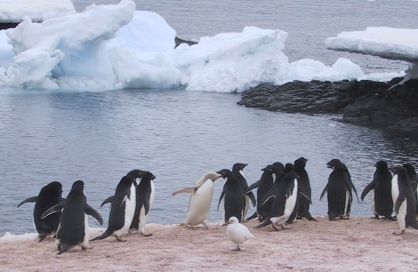
http://upload.wikimedia.org/wikipedia/commons/0/05/Penguins_on_Gourdin_Island.jpg
If you are intrigued by penguins, like I am, you may find this post of interest. After nearly 40 pieces related to human infection, it seemed okay to take a short break. 

I wondered recently: what pathogens infect penguins? There doesn't seem to be a large research literature on the topic, but what I found suggests that they suffer from, or at least carry, several. One study observed that some penguin species can be infected with Newcastle disease virus, infectious bursal disease virus (IBDV), and avian poxvirus. Recently it was observed that influenza viruses (H11N2) circulate in wild penguin populations (and that these viruses are genetically very distinct from avian flu viruses elsewhere in the world). Penguins can become ill with aspergillosis, and they can also suffer avian malaria caused by Plasmodium elongatum and P. relictum. Malaria seems to be a large issue for penguins in captivity.

The habitats of many penguin species tend not to overlap much with people's living spaces, though there are exceptions, like in the case of the blue penguin of southern Australia and New Zealand, which sometimes nests under houses. I suspect that it's unlikely that there is a threat to humans from infections carried by penguins, though I do wonder about ecotourism as a vector of infection to penguins. This has been discussed recently in connection with human metapneumovirus in gorillas.

If you like penguins and are interested in learning more, there is an exhaustive article on the diseases of penguins in the New Zealand Ministry of Agriculture and Forestry's Surveillance publication from December, 2001.

(image source: Wikipedia)

Saturday, June 14, 2014

Prediction is difficult, especially about the future (and, apparently, about flu)

http://upload.wikimedia.org/wikipedia/commons/5/5e/Niels_Bohr_Date_Unverified_LOC.jpgThe title of this posting, minus the comment about flu, is a quote attributed to Niels Bohr. I imagine him mumbling this while stewing over the horrors of making prospective predictions of experimental outcomes with no good theory to provide guidance. The concern is well founded and the idea that prediction is difficult is profound -- and it is relevant to much of the "big data" analysis that is currently in vogue. 

We should take notice of Bohr's admonition for the reasons so clearly described by Lazer et al ("The Parable of Google Flu: Traps in Big Data Analysis"), who review the failure of Google Flu Trends (GFT) in 2013. This is an excellent paper containing a direct critique of many issues facing not only GFT specifically, but also of the larger "big data" movement that is so much in the news today.

Briefly, GFT estimates flu prevalence by mining search terms from users of Google’s search engine and applying algorithms to the results. In the past, GFT's predictions have agreed with CDC surveillance data well, anticipating those data several days earlier than CDC. In 2013, however, it became clear that GFT was substantially overestimating flu levels. Lazer et al describe the failure and explain several ways in which the GFT approach is problematic.

Early in the paper they capture the essence of the Achilles heel of many "big data" projects at present, noting that
“Big data hubris” is the often implicit assumption that big data are a substitute for, rather than a supplement to, traditional data collection and analysis. We have asserted that there are enormous scientific possibilities in big data. However, quantity of data does not mean that one can ignore foundational issues of measurement, construct validity and reliability, and dependencies among data. The core challenge is that most big data that have received popular attention are not the output of instruments designed to produce valid and reliable data amenable for scientific analysis.
Read that again. Every word is important

The paper goes on to highlight several issues with GFT and what is known about the methodology involved in its predictions. Among other findings, they conclude that a forecasting model far simpler than the elaborate use of huge amounts of data in GFT could have forecast influenza better than GFT has for sometime. So why go to the bother of using massive computational resources to compute a result that's so inaccurate?

Fung, in a recent blog, provides a frank discussion of what "big data" are and, importantly, they are not. He describes the OCCAM framework, which amounts to "a more honest assessment of the current state of big data and the assumptions lurking in it". Within this framework, "big data" are:
  • Observational: much of the new data come from sensors or tracking devices that monitor continuously and indiscriminately without design, as opposed to questionnaires, interviews, or experiments with purposeful design
  • Lacking Controls: controls are typically unavailable, making valid comparisons and analysis more difficult
  • Seemingly Complete: the availability of data for most measurable units and the sheer volume of data generated is unprecedented, but more data creates more false leads and blind alleys, complicating the search for meaningful, predictable structure
  • Adapted: third parties collect the data, often for a purposes unrelated to the data scientists, presenting challenges of interpretation
  • Merged: different datasets are combined, exacerbating the problems relating to lack of definition and misaligned objectives
(Bullets taken directly from Fung.) Trying to make sense out of data that are poorly characterized or understood seems like a recipe for disaster. Traps aplenty indeed, and Lazer et al illustrate these traps for GFT in detail.

Such traps must be identified and worked around in sensible, theoretically sound ways. The OCCAM problems with "big data" do not mean that "big data" analysis is not promising. Rather, they mean that we need to be thoughtful when attempting to analyze such data, and that methods need to be developed to rationalize data so that they can produce meaningful results for biomedical and scientific issues.

What would Bohr think about "big data" if he were alive today? Who knows, of course, but I suspect he would be cautious to draw inferences based on any amount of data -- big or not -- unless those data are understood, characterized, and arguably relevant to a clear theoretical framework.

(image source: Wikipedia)