Saturday, May 24, 2014

Better understanding the home care environment

File:Gingerbread House Essex CT.jpgWhile hospital acquired infections (HAIs) threaten the wellbeing of many patients, those who are immunocompromised or immunosuppressed, such as hematopoietic stem cell transplant (HSCT) recipients, are at particular risk. Such patients are vulnerable to infections from other people (e.g., visitors, other patients, HCWs), the environment (e.g., surfaces, unfiltered air, linens), and themselves (e.g., pathogens shed from their own GI tract).

Infection is a significant cause of mortality in this population in the months following transplant and considerable care is taken to protect patients in the hospital. When they are well enough, recipients are released to go home and receive care there, with periodic visits to clinic. Typically, they and their home care providers are trained on how to prevent infections (e.g., through appropriate central venous line care, wearing of masks, etc), and sometimes home care nurses visit to ensure appropriate care is delivered. Medical supplies (infusion pumps, line care kits, saline, heparin, etc) are delivered; the house becomes a mini-hospital for care of the patient.

The approach seems to work well from an infection prevention perspective, but it's hard to be sure given the paucity of studies in the literature on the incidence of infections in home care populations. If the home care environment is protective to the patient, it's important to understand why that is, and if it's a threat, it's important to know that as well. Understanding the risk of infection in this patient population at home versus in highly controlled environments is important.

On the one hand, there's a different infection pressure in the home relative to a hospital. Presumably it's decreased at home, as there are no surrounding patients and there are fewer contacts with HCWs per unit of time. On the other hand, there is risk from contact with their home care providers, who often interact with many other people outside the home daily.

Moreover, the microbial environment of the home, as it relates to hematology/oncology patient health, doesn't seem to be as well characterized as that of the hospital environment. Looking through the literature that does exist isn't entirely reassuring. Whereas in bone marrow transplant (and related) wards there is extensive guidance on air filtration, cleaning procedures, and protocols for visitors, the analogous issues (e.g., ventilation, dust, cleaning) in homes are much more variable. The presence of pets may add additional risk. Furthermore, recovering patients often travel to and from hospital clinics on a daily or weekly basis. The automobile can also be a mode for infection, as has been pointed out recently for Legionella.

Improved surveillance for home care infections could lead to a better knowledge of the epidemiology of these infections and potentially identification of modifiable risk factors. 

(image source: Wikipedia)

Saturday, May 17, 2014

A fictional story: Counterpoint and extension

File:Guantanamo captive's hospital beds -c.jpgToday we welcome our first guest blogger, Dave Bridgelend, a mathematical modeler who focuses on business modeling and simulation. Dave has created business models for government agencies, financial services companies, telecommunications companies, energy companies, and healthcare organizations. He is the co-author of the book "Business modeling: A practical guide to realizing business value".
David Hartley recently described an attempt to reduce hospital acquired infections at the (fictional) Generic General Hospital. The attempt seemed successful, until the hospital CEO considered the broader impact of the effort. The budget for routine HAI prevention activities was raided to fund the improvement, and that budget diversion would likely cause unintended consequences.

But there is a bit more to this story. After the GGH CEO lectured her staff on unintended consequences, the GGH patient advocate spoke up. She pointed out that GGH already scored well on the HCAHPS measures of hospital acquired infections, earning ratings of "Better than the US national benchmark" on CAUTI and MRSA, and ratings of "No different form the US national benchmark" on the other four HAI measures.

"And when patients choose a hospital, they look at HAI a bit, but most of their decision is driven by what they hear from their personal networks. Last year when Martha was in the hospital for a week, the hospital made a big stink about her daughter staying in the room with her.  When Joe broke his leg, the hospital was too loud at night for him to sleep. When Carol had her hip replaced, she said the bathroom was dirty."

She continued: "I understand we want to improve GGH. But let's focus our attention on what the patients care about. Further reducing HAI won't bring them here. Keeping the bathrooms clean will."
(image source: Wikipedia)

Saturday, May 10, 2014

Legionella on ice

File:Legionella Plate 01.png"Legionnaires' disease" was the name originally given to an illness observed at a 1976 American Legion convention. Today, we call the illness associated with Legionella pneumophila infection, which can range from mild respiratory illness to severe pneumonia, "legionellosis". Legionella bacteria exist naturally in water and moist soil and colonies tend to grow in warm water, pools of which often form in improperly operated or maintained HVAC systems, hot tubs, and hot water systems. Legionella is an important cause of both hospital- and community-acquired pneumonia in both immunocompetent and immunosuppressed patients. Hospital-acquired cases are often associated with potable water systems colonised with Legionella.

A story in the Pittsburgh Tribune-Review recently described an unusual outbreak at a Pittsburgh hospital. Although the epidemiology showed an association with ice chips, investigators were unable to find Legionella in the hospital water system. How could Legionella appear in ice from machines supplied by cold (not hot) water lines free from the bacterium? It was ultimately determined reservoirs within hospital ice machines were warmed by internal compressors, thus allowing Legionella colonies to grow.

Previous outbreaks involving ice makers and Legionella have been described in the literature (see, e.g., Schuetz et al, 2009, Graman et al, 1997, and Stout et al, 1985), but I doubt that many would immediately respond "ice machine" when asked about likely sources of Legionella infection in a hospital. Though anecdotal, this story illustrates how counter-intuitive outbreak investigation can be: One wouldn't necessarily think to look in a freezer for a bug that needs warm water to grow. But there it was, and hospital investigators figured it out when the ice chips were implicated. Bravo! 

(image source: Wikipedia)

Sunday, May 4, 2014

Semmelweis and hand hygiene


Dr Ignaz Semmelweis was a Hungarian born physician who worked in Vienna in the 1840s. He is popularly credited with the discovery of the importance of handwashing, though perhaps it's more accurate to say that he was among the first to appreciate the importance of hand hygiene, rather than handwashingHarbarth (2000) points out that
. . . many scientists have cited Semmelweis' observations, but, amazingly, grossly misleading impressions still arise about Semmelweis and his original idea of antiseptic hand disinfection, often wrongly cited as “handwashing” in the English-language literature. In fact, Semmelweis never promoted handwashing with soap and water; he was opposed to it, since he wrote: “The cadaveric particles clinging to the hands are not entirely removed by the ordinary method of washing the hands with soap.… For that reason, the hands of the examiner must be cleansed with chlorine, not only after handling cadavers, but likewise after examining patients”
Indeed, Semmelweis promoted a policy of using a solution of chlorinated lime (calcium hypochlorite) on the hands between autopsy work and the examination of patients, as opposed to soap.

So, let's celebrate Semmelweis' insights about the importance of the hands in infection prevention rather than associating his name with handwashing alone. He's recently come back on Twitter to help us -- and certainly we need that help. The WHO's World Hand Hygiene Day is May 5. Check out how you can help raise awareness about hand hygiene.

(image source: WHO)

Saturday, May 3, 2014

First US MERS case announced

Photo: MERS-CoV particles as seen by negative stain electron microscopy. Virions contain characteristic club-like projections emanating from the viral membrane.Yesterday the first case of Middle East respiratory syndrome (MERS) observed in the US was announced. The case is a man who flew to Chicago, Illinois from Riyadh, Saudi Arabia by way of London, England. After landing in Chicago, he took a bus to Indiana. He arrived in the US on April 24 and began experiencing shortness of breath, coughing, and fever on April 27. He presented to a community hospital in Munster, Indiana, on April 28; because of his symptoms and travel history, the man was tested for the MERS coronavirus.

Understandably, the story is being covered widely in the press. One can learn more about MERS from several sources. The ECDC MERS-CoV epidemiological update as of April 30 is an excellent summary of MERS globally, and additional resources can be found at the CDC MERS Website. UPMC has also published a nice summary of the global situation. 

It would be interesting to utilize mathematical modeling to estimate where, assuming the patient was infectious while on the bus and planes, new cases might be likely to develop, geographically speaking. Such analysis could be helpful for instituting intensified surveillance in the places most likely to have such cases; using models, it may be possible to forecast the most likely cities. A rich set of methods, spanning the 1960s to the present, has been developed to understand the spatio-temporal spread of influenza and those could probably be adapted for such purposes if data on domestic bus, rail, and air travel since the plane landed is available. And while it's true that significant uncertainties in latency and incubation periods, transmission rates, and other epidemiologic parameters exist, there are techniques that allow us to estimate the effects of such uncertainties on model results.

Gathering the data, especially the transportation data, may be difficult. A NYT article this morning noted
The typical incubation period for MERS is five days, and the patient is not known to have infected anyone else. Airline passenger lists will be used to contact everyone who sat near him.

But because bus companies often do not know who bought tickets or who sat where, “that bus ride may be a challenge,” said Tom Skinner, a C.D.C. spokesman.
Information on rail passengers may be similarly difficult.

The time to develop adaptable modeling capabilities and gather such data is before new diseases emerge and spread. Of course, it's not possible to anticipate specific details about a new disease prior to emergence, but we do have some data on MERS already, plus lots of insight into how respiratory diseases spread in general. 

Regardless of models, it will be interesting to watch the MERS situation develop globally in the coming months.

(image source: CDC)

Wednesday, April 30, 2014

Update: Vaccines as a tool in the post-antibiotic era

Embedded image permalinkAfter posting the piece on vaccines yesterday, a new study by BA Diep et al was brought to my attention in which the surface proteome of a prevalent strain of MRSA was determined. Work such as this is important for identifying potential antigen combinations that could be included in future multicomponent Staphylococcus aureus vaccines.

Moreover, today the WHO published a report on antimicrobial resistance. It notes, inter alia, that
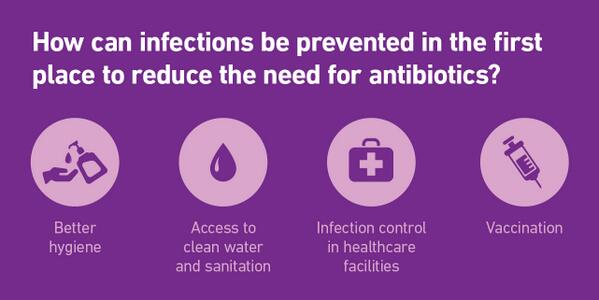
Greater emphasis should be placed on prevention, including strengthening hygiene and infection prevention and control measures, improving sanitation and access to clean water, and exploring a more widespread use of vaccines. Although preventive vaccines have become available for several bacterial infections, their application is still limited.
It's clear that a multifaceted approach is needed to deal with the antimicrobial resistance problem. The WHO study, and related commentary, helps to frame and build awareness of the issue. New vaccines could help.

(image source: WHO)

Tuesday, April 29, 2014

Vaccines: A tool for the post-antibiotic era?

PHIL Image 14537In honor of World Immunization Week this week, I recently read two books by Paul Offit: Vaccinated: One Man's Quest to Defeat the World's Deadliest Diseases and The Cutter Incident: How America’s First Polio Vaccine Led to the Growing Vaccine Crisis. Both are excellent. Vaccinated is essentially a biography of Maurice Hilleman, but it also reviews how several of the important vaccines currently in use were developed and marketed. The Cutter Incident tells the story of incompletely inactivated lots of polio vaccine manufactured by Cutter Laboratories, which caused 40,000 cases of polio nationwide in 1955, including 200 cases of paralysis and 10 deaths. There are many pearls and much wisdom to be found in the pages of these two books; I recommend reading them.

Certainly the utility of vaccines is well demonstrated and their development and application is one of the major accomplishments of modern medicine. In the US alone the improvement of population health as vaccines have become available is remarkableGlobally, it has been estimated that vaccines prevent nearly 6 million deaths annually worldwide.

The books got me thinking about future potential vaccines. In one passage, Offit recounts the development of a pneumococcal vaccine and quotes Robert Austrian talking about the rationale for his work:
The only alternative then to protect those at high risk of early death is to prevent them from becoming ill.
This beautiful and simple idea -- a medical and public health truism if ever there was one ("an ounce of prevention is worth a pound of cure") -- strikes me as relevant to HAI and antibiotic resistant infections. Think what healthcare might be like if there were vaccines for many of the bacterial infections that are currently problematic and often resistant to antibiotics, like Staphylococcus aureus, Clostridium difficile, and Neisseria gonorrhoeae.

Several antibacterial vaccines are available, including ones for pertussis, tetanus, diphtheria, meningococcus, pneumococcus, Haemophilus influenzae type b (Hib) disease, cholera, typhoid, and anthrax. However, there are reasons that vaccines for S. aureus, C. diff, and N. gonorrhoeae (as well as others) don't yet exist. For one, the immunology can be complex, as Offit explains in the discussion of the pneumococcal vaccine. Proctor describes the situation for Staph aureus in a recent review, as do Fowler and Proctor in another review. Also, the cost of developing, testing, and licensing can be steep relative to the profits of a licensed, marketed vaccine. Yet another issue is the specter of adverse events, both real and perceived. On this point, Offit notes that
. . . a technology that would clearly save lives sits on the shelf. "We could make a group B strep vaccine tomorrow," said one senior pharmaceutical company scientist. "But it would have to be given to pregnant women and we couldn't handle the liability." 
Dempsey et al offers a recent, interesting, and partially validating study to this view of a potential group B strep (GBS) vaccine. Such issues are difficult.

That being said, perhaps vaccines should be emphasized more in the conversation regarding antibiotic resistance. I've wondered in the past about the effectiveness of developing new antibiotics when there seems to be little reason to believe, given the past track record, that they will be used responsibly. A new generation of antibiotic drugs could become useless within a few years if effective antibiotic stewardship isn't practiced globally. Vaccines, if they could be made, may offer protection against what may soon be untreatable infections. Or put differently, perhaps vaccines could be an important tool in a post-antibiotic era.

Of course, there are issues to be better understood and addressed. Recent work illustrates that Bordetella pertussis is evolving in response to the vaccine, raising the possibility that future vaccines may be associated with similar dynamics. Also, vaccines to human commensals like Staphylococcus aureus might promote overgrowth of other commensal organisms. Studies have investigated this for the case of Streptococcus vaccination and MRSA colonization and infection. Moreover, it's unclear whether people would really embrace more vaccinations given the current and recent climate surrounding vaccines.

Regardless, one seldom hears about vaccines in the conversation about antibiotic resistance. It seems like funding should address making new vaccines as well as development of new antibiotic drugs -- because Robert Austrian was right. 

(image source: CDC/PHIL)